Showing posts with label 1945. Show all posts

77 Januarys Ago


Wolf Moon, January 17, 2022

It's cold here in Winterpeg, Manitoba. Minus 27 C or -37 with the wind chill (that's meterological-speak for what it feels like depending on the wind speed). But the sun is shining and after the recent snowfall, the world outside my window looks cheery and bright. Dog walks are fast, my car gets pre-heated (even the seats and steering wheel!), I have a pantry stuffed with food, I have hot tea and lemon, my summer geraniums are still blooming in the January sunshine . . . in short, I can’t complain. I’m even triple-vaxed. 

But my bubble of security and domestic bliss is just that . . . a bubble. There’s a scary world out there. Most disturbing to me is the build-up of the Russian army on Ukraine’s borders. Ukraine, where my mom and grandparents were born, where my grandfather died, where the family windmill once stood. 

Ukraine means borderland. I’ve always considered myself a fence-sitter, enjoying the views of both sides of many aspects of life, and can appreciate the precarious and lonely nature of such a position. Ukraine wants to be part of NATO, to belong to the west. Russia says, never. 

At the very least, a cold war appears in the offing and my heart breaks for the Ukrainian people. The Russian leader, full of nostalgia for the Soviet state, wants to prove that his country still has the power to create fear. How many troops now?

77 Januarys ago, the Soviet/Russian Army instilled great fear in my mom and her family. While Hitler focused on battling the Allies on the western front, the eastern front was exposed to the Soviets and East Prussia quickly crushed. My new novel, Crow Stone, (Summer, 2022), imagines my mom’s efforts in January, 1945 to avoid the Russian/Soviet army which is again itching to advance. 

How will this winter, 2022, play out?


In her Own Words: Christmas in the Urals, 1945

Someone recently asked me whether it was my mom's voice or mine that expressed writerly ambitions in Tainted Amber.  

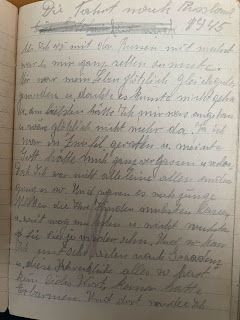
While my mom regularly derided my interest in books as 'brotloße Kunst' or 'breadless art,' I've scavenged bits and pieces of her own words written in her hard-to-decipher handwriting. Just recently, I found, inside what I thought was an empty journal, pages called "Die Fahrt nach Russland, 1945" or 'The Journey to Russia, 1945.'  Such a treasure which served to underline her oral sharings of those dark times. Crow Stone is based on her memories, after doing much background research.

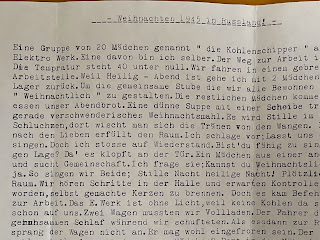
My mom actually had a piece published in Kanada Kurier a German-language newspaper, based here in Winnipeg. (It morphed out of the 1969 closing of  Der Nordwesten.)  I found Mom's yellowed newspaper article amongst her scattered papers, in between recipes and budget plans. Both newspapers were ubiquitous in our house when I was growing up. Now I scrounge to find copies!  Here's a translation of her published piece about Christmas as a prisoner of war. 


The Story of the Coal-shippers’ Christmas

by Else Schroeder 

(translated & edited for flow and clarity from the German by Gabriele Goldstone)

A group of twenty girls, called the coal-shippers, is working at an electric energy plant near Kurgan and Chelyabinsk in the Urals. I am one of them.

The distance to work is about seven kilometers. The temperature is -40 degrees and we travel there in the back of a dilapidated truck. Because it is Christmas Eve, two other girls and myself go back to our camp early to warm up the room we all share and to decorate it to look a little bit festive.

When the rest of the girls return, we eat our evening meal: thin soup and a slice of dry bread – not a very satisfying, elaborate Christmas dinner!

Back in our barrack, it becomes quiet. Here you hear someone sobbing, and there someone wipes away a tear from her cheek. Homesickness and longing for loved ones fills the room. I suggest we sing some Christmas songs, but there is opposition.

“Are you able to sing in this dreary place?”

There’s a knock at the door. A girl from another group is looking for company. I ask her, “Do you want to sing some Christmas songs?” She says yes, and so the two of us sing Silent Night, Holy Night.

Suddenly it’s dark in the room. We can hear footsteps in the hallway and expect an inspection. We had been told not to burn homemade candles. But instead, we receive orders to line up immediately to go back to work.  The electric plant is out of power and needs more coal. The old truck is already waiting for us.

We head back out and fill up two lorries. The truck driver has a nice nap while we slave. Then, when it’s time to return to our camp, the truck won’t start. It’s probably frozen.  Now what?  

“Wait here until someone comes to get you,” is the order. The guard points to a building not too far away—a stall for animals. It’s filled with cows, sheep and even a donkey.  

The night is cold, the sky, clear, starry. After the guard heads back to the main camp in his own vehicle, peace and quiet surrounds us. The animals are lying on their beds of straw, and us girls, tired and worn out from the cold and work, do the same, trying to get some sleep.
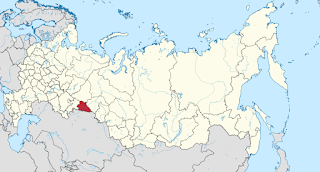
Kurgan Area in the Urals. Wikimedia Commons
But one of us has to stand guard, and that one is me, because I have been made their leader. While the others sleep, in my mind, I am participating in the Christmas story. The stars so bright. The animals in the barn. Everything leads me to Bethlehem. I am celebrating Christmas with twenty other girls and still I am all alone. 

Finally, it’s morning.  Another truck fetches us for some breakfast and then it’s back to work again, back to shovelling coal.

That was my Christmas in the year 1945.
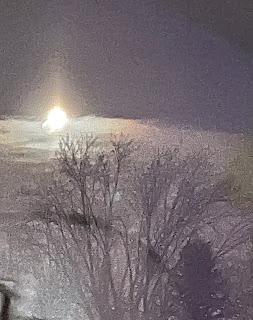
 

Yantarny Holocaust Memorial

We had an incredibly mild holiday season here in Winnipeg. Single digit winter weather was a treat—we know it doesn't last. This is Winnipeg, after all.

Now imagine a war happening in bad weather. Imagine January, 1945.  Lots of snow. Wind.  Double-digit cold. Hunger and exhaustion has numbed people. The Nazis, now on the run, are desperate to hide their crimes.

One horrendous 1945 scene happened near Yantarny (in German times known as Palmnicken—site of an amber mine). 
Amber Mines Yantarny

In '45, the Stutthof concentration camp, now Sztutowo, Poland, thirty kilometers outside of Gdansk, formerly Danzig, was hurriedly evacuated and its thirteen thousand inmates forced to march the two hundred kilometers up to Palmnicken.

Baltic Ice Floes
The Nazi SS planned to dump the inmates in an underground mine tunnel, called Anna, to let them die. Of the thirteen thousand people, forced on this two-hundred-kilometer march, only three thousand survived. The rest succumbed to the cold and physical strain. (In contrast to the victims, we biked the same route in wonderful weather, enjoying the beautiful forests, gentle hills, and great restaurant stops along the way.) 

When the prisoners arrived in Palmnicken, the amber mine manager refused to allow trek survivors into the mine. So the desperate SS guards forced three thousand dying people into the icy Baltic, shooting the victims who weren’t dying fast enough. Somehow . . . thirty-three people survived.

The Yantarny monument, created by Frank Meisler represents the hands of the dying people reaching up in surrender. In August of 2011, only seven months after it was made public, the memorial was vandalized. Anti-semitism hasn’t gone away. But neither has goodness.  Cherokee wisdom says we must keep feeding the good wolves in each other. 

Recent Posts

Writer's News

I’m darn happy to share a bit of my writerly journey on a podcast, ‘ A Writer’s Life ’ hosted by the gracious and fabulous host, Heige Boehm...