Showing posts with label immigrants. Show all posts

Newcomers still Struggle to Belong

This morning the announcer on my kitchen radio shared news that a 14-year-old girl had been assaulted and bullied in a local high school... supposedly because of her Ukrainian accent. This school is ten minutes from my home. All three of my kids attended the institution set in a middle-class neighbourhood. I assume that means the residents have some sort of higher learning.  How can war refugees be bullied? Where does this sort of attitude come from? 

In my novel, Waltraut (Heritage House, 2024), my protagonist also gets bullied and ostracized because of her immigrant background. But that story was set back in the sixties. Has our Canadian education system still not enlightened students about the challenges of immigration? Is our Canadian society still afraid of people who have an accent, or a difficult-to-spell name, or parents who struggle with English? Are we Canadians still afraid of people who are different?  Are our children learning intolerance from the adults in their lives?

As I did my daily walk in the woods close to Oak Park High this morning, I pondered the learning that happens in between the classes, between the official curriculum, in between the necessary bureaucracy.  What are schools teaching our next generation? How can Canada better embrace its newcomers?

Waltraut reflected my own uncomfortable school experiences. Has nothing changed in fifty years?  Shame on us. 


About Immigrants, Restaurants and Dreaming Big

I heard a repeat broadcast on  CBC radio this past Victoria Day where Rachel Phan was interviewed about her new memoir, Restaurant Kid.  The conversation struck some of the same notes played in my middle grade novel, Waltraut. Similar tones included the immigrant school lunch, the busy immigrant parents, the guilt, the shame, the lack of connection between parents and the very children they’re making such self-sacrifices for. Rachel Phan’s family has a Chinese/Vietnamese background.  During her childhood, she lacked understanding of her family's challenging and traumatic past.  As a restaurant kid she felt her basic needs were often overlooked as her ‘hard-working’ parents put all their energy into the restaurant. 

Back in March, I attended a 100th birthday celebration in a newcomer’s ethnic restaurant. Jimmy (his Canadianized name) comes from Pakistan. Along with his wife and five children, the restaurant is his dream of success. Let me share a wee bit of the fascinating story behind Jimmy’s Pakistani restaurant, Barbecue Hut, here in Winnipeg at 445 Notre Dame Avenue.

Irma, Jimmy, his wife and 4 of his 5 children


Jimmy was flying solo to Canada from Pakistan when he sat beside my friend’s mom, “Irma,” once a post-Second World War immigrant from Schlesien (now part of Poland).  The flight was long and the two travellers struck up a friendship. Imagine: a young man sets out to improve his fortunes in a foreign country and meets Irma, a little old lady returning to Canada after visiting her daughter (my friend, who’d been living in the Middle East). Irma invites Jimmy to stay at her place until he gets settled. She opens up her tiny apartment and her life to him. Weeks turn into months ... turn into years. Finally, after much hard work along with Irma’s generosity, he’s ready to bring his wife and young children to Canada, because Jimmy now has his own restaurant—the Barbecue Hut.

Irma turns 100!

Back in March, Irma from Schlesien, turned 100 and Jimmy hosted a wonderful birthday party for her in his authentically furnished Pakistani restaurant. I was privileged to be an invited guest. It was a wonderful occasion to celebrate life, along with the dreams of immigration, and the power of kindness and friendship … with some excellent, traditional Pakistani food.

Seriously good food and a story to warm your heart. 

Barbecue Hut, 445 Notre Dame Avenue in Winnipeg


And now on to some seriously bad poetry, but with well-meaning enthusiasm. 

Want to eat some ‘real’ good food, but …

Not sure where to go?

You should try the Barbecue Hut.


Enjoy your life … take it slow.

Tell me again ... where and what?

Best food in town at the Barbecue Hut!


But, but, but? ... no but!

Get your butt out of your rut …

And try, just try, the Barbecue Hut!


Building New Homes

My dog and I discovered who the fort construction workers were in the little woods we frequent on our morning walks. Turns out they’re two teenagers from Ukraine … one from Kharkiv and the other from Odesa. So now we say Pryvit (an informal hello).


Our city has welcomed many refugees from war-torn Ukraine. My oven was repaired by a man from Kyiv. My new windows and door were installed by Ukrainian newcomers and I bought the most the most delicious sourdough bread at a local school craft sale. Today I’m meeting one of my former Ukrainian students whom I supported while volunteering with Immigration Canada. She’s integrating well (after a few speed bumps) and transferring her accounting skills into a new career here in Manitoba. 

Pryvit to these wonderful newcomers. You’re making Canada a better place. But I'm sad about all the talent and youth that Ukraine is losing. Knowing that it’s now signing away its mineral rights to the USA feels disturbing. Is this Ukraine’s future? Is this rich country being drained of its people, its resources along with its land and culture? Will these Ukrainian newcomers to Canada keep their cherished homeland alive through art and culture? Will they be able to return to their country to show their children where they once grew up?    Once my mom left her childhood homes in Ukraine and East Prussia there was no going back.

Truth is, sometimes you can never return and building a new life might be difficult but it's rewarding too.  After all, building a fort in the Manitoba woods sure beats hiding in the woods of a country at war. 


Immigrants


As I prepare for a rare family reunion (in Mexico, of all places!) I remember the family members who won't be there. 


My grandmother Matilde and her youngest son, my uncle Jonathan
... both died during Siberian exile
But, at least now I know they once existed and a little bit of the story. 


Former East Prussian refugees arriving in Winnipeg, Canada, 1953


Learning about those who never had the opportunity to immigrate. 

The orphaned children left behind in East Prussia
The Wolf Children of the Eastern Front


The immigrant church in Winnipeg filled with displaced survivors
who turned to faith for healing. 


Where a daughter of immigrants 
tries to figure out who she is


Old Houses

Our family's house buried in snow back in 1966 ... 'Just like in Siberia' my mom liked to quip

Drove by the house my parents bought brand new back in 1964. It’s modelled after a show home featured in my upcoming release, Waltraut. My mom sold it after my dad died in 1993.  
2024

I meandered past last week, trying to be inconspicuous as I spied on the place. I took note of the changes but also the similarities. Some of the perennials, like the Maltese Cross, are still going strong and that must be the same evergreen my parents planted, sixty years ago.  Most noticeable were the Canadian and Ukrainian flags above the yellow and blue painted bistro set. How fitting that my Ukrainian-born mom has a Ukrainian flag fluttering above her dear old house. No doubt, she’d be speechless. Ukraine wasn't a country for most of her life. While it struggled for its identity around the time of Mom's birth, back in 1919, Ukraine never regained independence until 1991.

Scooting down the back lane, I spotted an SUV in the open garage my dad had built back in the sixties. The SUV had an “AirForce” license plate. My father, the former Luftwaffe pilot, just might be grinning his head off. What serendipity that this little dream house my parents bought back in 1964 continues to be a home to pilots and Ukrainians. 

1970s 
My parents liked to host German soldiers training at CFB Shilo

A few days later, overcome by curiousity, I found the courage, went back, and rang the doorbell. The owner was home and shared her background and her pride of the backyard garden where she grows tomatoes and cucumbers.  Her great-grandparents came from Ukraine about 1914 (that explains the Ukrainian flag) and her husband was in the Canadian Air Force (that explains the Canadian flag). And so, the once new house for new immigrants continues to be a home for former pilots and for gardeners. I bet her pickles taste yummy.


2024


sunset vs sunrise

A friend invited me out to Victoria Beach the other day where she'd been granted an art retreat. Driven by curiousity, I jumped at the opportunity to enter through the gates into this restricted and historical beach resort. Victoria Beach, on the east side of Lake Winnipeg, has had a reputation of being unfriendly to immigrants. 

Until the 1950s, cottages throughout Manitoba were accessed by trains. One track ran up the east side of Lake Winnipeg serving Grand Beach and Victoria Beach (along with smaller resorts) and the other track went north along the west side, serving Winnipeg Beach and Gimli areas. The different routes also meant that sun-seekers didn’t have to mingle with other races, ethnicities or classes. 

East side of Lake Winnipeg at Victoria Beach

To have a cottage at Victoria Beach meant you were a ‘civilized’ person who was escaping into nature because you had earned it … you were successful. It also meant you were probably British. You were definitely not Jewish or East European. East beach people got to walk sandy beaches and watch sunsets.

Meanwhile, the rest of us … the immigrants, the poor, and the dis-inherited … established beach communities on the west side of Lake Winnipeg. Here, we got to watch sunrises and collect stones on the rockier shoreline.  The really well-healed holiday-ers headed out straight east to Lake of the Woods, a lake offering up islands for total privacy. Again, a different train route. 

Nowadays, of course, cottage communities don’t depend on trains. A network of highways created access to many summer resorts throughout our well-laked province. Even campers like me have access to beautiful beaches. 

My parents, 1950s' immigrants, could never own a Victoria Beach cottage but that didn’t stop them from dreaming of a west side cottage.  My dad helped build enough of them in his early years here in Canada but it wasn’t until I was in high school that his own cottage finally became a reality on Valhalla Beach. 

My dad (left) at a cottage construction site, 1950s

Nearby Gimli had a thriving community of Icelanders, Winnipeg Beach welcomed Jews, and Ukrainian and Russian settlers built up other spots on the west shoreline.  Yes, the east side still has better sand and idyllic sunsets. It still holds on to a nostalgic past that still charms its privileged vacationers by keeping out the public. 

But the west side has great rocks, good fishing and ordinary people. The sunrises are amazing and promise a future that assumes equality amongst all ethnicities. 

West side of Lake Winnipeg near Gimli


Fitting In

Just read Call Me Al, written by Wali Shah and Eric Walters. It’s a middle grade novel exploring the immigrant experience in Canada. Having spent the past seven years meeting with newcomers as an ‘English language facilitator,’ I can appreciate the challenges of adjusting to Canadian culture.  I grew up in an immigrant family and know what it’s like to live in two worlds. Call Me Al was told from an insightful and captivating young person’s perspective.


Wali Shah, author and spoken word poet

Wikipedia image

Like any young person, 13-year-old Ali desperately wants to fit in, hence his name Ali, becomes Al. This reminded me of an incident working in an after-school science program, a few years back. We had Syrian refugees in the grade three class and I was unsure of one boy’s name. “Just call him Mohammed,” one white boy shouted. “My dad says they all have the same name.” Like skin colour, names matter when you’re a kid … they can label you as different. 

While I didn’t have to deal with the challenges of racism, back in the sixties I had to deal with the post-war stigma of having German parents. My father had been in the Luftwaffe and still had a rough, military exterior. My mother … well, we dismissed her messed up past as too confusing … something I’ve tried to make up for with my novels. 

'Gangsta'-posing at Anita Daher's potluck
May, 2023
with the award-winning & prolific
Eric Walters

In Call Me Al, Ali needs to please his self-sacrificing Pakistani parents who expect him to become a doctor. Turns out that at 13, Ali has emotional and social needs that can’t be neatly resolved with perfect math scores. 

Without giving too much away, the novel ends with a compromise. I’m not sure every immigrant child’s story ends so neatly, so happily. But middle-graders might feel empowered by Ali’s story. It’s the kind of novel I wish I had an opportunity to read when I was an awkward grade eight kid, ashamed of her family and living in two worlds. 


Curious, Kind, and Brave


Absolutely thrilled that my new manuscript, “Waltraut” (working title) has been accepted for publication. This book was so much fun to write, that it barely felt like I was working. I loved playing with my protagonist, Waltraut. She’s been a good friend to me over the last few years. Re-visiting childhood memories like Saturday German school, summer church camp or the show-home dream, put me into a youthful headspace, decades away from today. 

Waltraut also reminded me of the challenges that come with being in two worlds … the stress of fitting into a Canadian school and community. Whether it’s the obvious issue of language, or the subtler issues of culture including food, hair, clothes and parental expectations …there can be huge demands on a young person in a new country. The issues Waltraut faced back in the 1960s, still exist today. Immigration—due to war—is a current affair.

What I want readers of this middle grade novel to discover is the empowerment of being themselves … of embracing and loving who they are … of speaking their truths. Diversity is a strength. We’re all unique, all different and yet we’re all on the same journey. To be you is not a noun … not a reflection in the mirror defined by hair, skin colour or clothes. It’s not a language to speak or read, or a food to cook and eat.  To be you is to be a verb … to accept, to share, to learn, to be a friend. 

I thank Nancy Drew for inspiring me to strive to be curious, kind, and brave!

p.s. More information about my new publisher and release date will be coming soon. But I just couldn’t wait to express some of my excitement! 


If Tables could Talk

December, 1953. This photo shows my extended family celebrating their first Christmas as newcomers to Canada. The women in the photo were born in Ukraine; my dad and Uncle #2 were born in Germany.

Dinner was around a maple table in a rented house in the Wolseley neighbourhood. Yes, there's the ubiquitous fowl … probably a turkey, but maybe a goose … centre stage. 

Because I write fiction, I won't identify these people (except my parents). They don't need to be directly attached to the stories I’ve created about them. Suffice it to say, they’ve inspired my writing. As a fiction writer I'm interested in creating stories with compelling character arcs but I strive to be accurate with the historical and physical setting.

Aunt #1: Far left.  A talented seamstress who would sew any dress a young girl could imagine.

Next, my mom. Three months pregnant with me in this photo. She’s wearing a home-knit red vest, that I might actually still own. 

Next to her, my father. Three years earlier he'd been released from a Soviet POW camp.

Aunt #2: Standing at the back, in the middle.  As my mom’s youngest sister, she adopted a lost refugee child during the flight from the Soviets, back in 1945. Married later here in Canada and had 2 sons.

Uncle #1:  Married to Aunt #1. He was 51 years old here. His history included exile to Arkhangelsk in 1915, life under Stalin, life under Hitler, time as a Soviet POW and finally arriving in Canada where he worked until his retirement as a school janitor. He made some really good homemade wine in his Okanagan home in his later years where he liked to talk about the Russian years to anyone who’d listen. We all dreaded his stories as kids.  

Cousin #1:  Next to Uncle #1,  on the right, daughter of Aunt #1 and Uncle #1.  She was the last of this group to pass on, back in September of this year.  Known for her beautiful garden in the Okanagan she didn't talk much about the past.

Uncle #2: Married my Aunt #3 in 1952. I know little about him. He died of asbestos poisoning after working at Alcan smelter for many years. Mostly, he's defined in my memory as the man with the white Cadillac. 

Aunt #3: Married to Uncle #2. My mom's other sister. Childless, she adopted two children.

A photograph with endless stories. Tragedies, comedies, romances, children’s tales … and big secrets. All the faces seem preoccupied. Are they thinking of the past … of the decimated old world? Perhaps they’re looking ahead ... to the potential of this new world. 

The table around which these Christmas dinner guests sat has been in my house until this fall when my youngest daughter took it over to her new place, also in Wolseley.  Legs chopped down to make it coffee table size, maybe it’ll continue to absorb conversation. 

My immigrant family.  I’m grateful for their adventurous spirit, their courage and for their stories. Maybe I was just a twinkle in my dad’s eye, or a slight bump in my mom’s lap … but like that table, I feel like I’m a part of that dinner, too. And almost 70 years old!

Happy Christmas Dinner to all. 


Naming Characters

About Olga becoming Katya.  Back when I was writing The Kulak’s Daughter I chose the name Olga for my protagonist. While uncommon here in North America, it’s popular in eastern Europe. The name, in fact, has Scandinavian roots and is meant to be a positive blessing for a child. But every immigrant knows that names don’t always travel well. What’s considered a pretty name in one language, might connote only ‘otherness’ in another.

My mom had a Tante (Aunt) Olga and there were several older Olgas in my immigrant church congregation. It was a name I associated with ‘otherness’ but also with old and with the 'old' country. Olgas were the 'babushkas' during my childhood ... along with the Elfriedas and Hildegards. Just plain old-fashioned immigrants.  I also like Olga because it translated to Helga in German and that seemed convenient to my purposes as I developed my stories. (There is no H sound in Russian. Hence, Hitler becomes Gitler.)

My editor, however, decided that the name Olga was too foreign-sounding and off-putting for potential Canadian readers and wanted me to change it. I did so reluctantly and still regret it. It seemed to only underline the foreignness of my own name, Gabriele Ulrike, a name that marked me as an outsider when I was going to school. My parents called me Gabby (Gabi) and teachers butchered my name, giving it French flair, like Gabriella, or masculinity, like Gabriel. I still have to correct official documents. And my middle name, Ulrike? Well, that’s also been an embarrassment. 

How I pined for a simple name that would blend in with the masses … like Debbie or Karen … a name that would not be mispronounced or misspelled. I was named after twins that my mom helped birth in post-war Germany, and all I can say is, I’m grateful that Gabriele was born before Ulrike! 

The Ukrainian newcomers I’ve been meeting here in Canada, all have such lyrical names like Tatiana, Elena, Oksana, Anastasia. Musical names that sing like songbirds.  Makes Gabe sound like a lonely one-note crow. 


About Homes

House in the former Federofka , Ukraine (mom's home village)
Perhaps it’s not surprising that the newcomers to Canada with whom I’ve been meeting are looking forwards not backwards. I know that my immigrant parents didn’t talk much about the war, about the Soviet prisons, about their homelessness. Instead they focused on working, on building homes, creating gardens and raising their children. They didn’t sit around and discuss why it took until 1945 for the war to end. They didn’t wonder if they could have found another evacuation route. They didn’t question what had happened to them. They just focused on the present... on creating a home.

Currently, I’ve been learning from recent Ukrainian arrivals. (Ha! They think they’re learning to improve their English, while truly, I’m re-learning what it means to escape from a war-torn country.) The women I’ve talked with don’t want to discuss politics. They don’t want to talk about the military strategies or about potential outcomes. They want stable jobs, a good education for their children and a decent apartment. Their native languages are Ukrainian or Russian. For them, languages are tools not political systems. 

Uncle's home in Slavskoye, now part
of Kaliningrad Oblast

I’m rather surprised that in some cases I know more about their history than they do. I’m more surprised that they don’t really care. Like I said, they have more immediate concerns. All of this helps me realize how it was when my parents arrived here in the fifties and shelved the past into books and photo albums that became yellowed, dusty and almost forgotten. 

What will Ukraine be when the war ends? Many Ukrainians will be wounded or dead. Many will be citizens of another country. Whole cities have been destroyed. The students I work with have no home to return to. Their families and friends have all scattered throughout Europe and Canada—wherever they could find asylum. 

When I cycled through my mother’s second home in East Prussia, I found just a divided land of ruins. The house her uncle built still stood, but the old man in it was from Kazakhstan. Friendly chap. Happy to have a house with a garden for his retirement. My mom’s first home in Volhynia, once a rich farmland dotted with wooden windmills and red brick churches, became a scattered collection of poverty-stricken hamlets with crushed people in crumbling shacks. 

Next to father's home in Schleswig-Holstein

I admire the energy, spirit and ambition of the Ukrainian people. They help me appreciate the good life I’ve been living here. Peace. 

Here’s a quote I’ve often considered. Because war isn’t only about soldiers. War is about ordinary people. I hope it doesn’t offend anyone. 

“Why of course the people don't want war. …  But, after all, it is the leaders of the country who determine the policy and it is always a simple matter to drag the people along, whether it is a democracy, or a fascist dictatorship, or a parliament, or a communist dictatorship.

Voice or no voice, the people can always be brought to the bidding of the leaders. That is easy. All you have to do is tell them they are being attacked, and denounce the peacemakers for lack of patriotism and exposing the country to danger. It works the same in any country.”

― Hermann Goering

Parents' first home in Winnipeg


About Immigrants

I’ve been working on two novels about the Canadian immigrant experience and volunteering with newcomers helps me stay in touch with the current crisis. 

A long journey war-torn Europe to a train station
in Winnipeg, July, 1953
Spending time with Ukrainian immigrants helps me appreciate the human cost of the Putin’s invasion—but barely. It’s not my home town that stands empty and destroyed. It’s not my family back there still trying to eke out a living. It’s not my cousin wounded or missing on the front line. It’s not my life on hold. It’s not my diploma that's no longer valid or my language skills that are suddenly useless. As the mayhem of violence continues on the disputed borders with Russia, immigrants here in Canada start all over again, like high school students. 

The Ukrainian women I’ve been fortunate to coach have such beautiful names and faces. They’re so determined, so resilient, so positive-minded. Maybe they had management positions in Ukraine, here they’re grateful to clear tables, make beds or labour in sewing factories … while their children make friends, become fluent in English and grow without fear.

Immigrant ship, the Beaverbrae

I can’t help but think of my parents. Immigrants to Canada after the Second World War, my mother had no home to return to while my father lost his first wife and two young sons. Canada took them in and gave them a safe place to raise a family. 

My father could fix or build anything and he flourished in various construction related jobs while my mom ended up in a potato chip factory with other displaced people.  Neither job required English skills.

Canada's many challenges include climate change, housing and support for diverse populations. Also, we’ve only recently recognized the indigenous peoples who were manipulated and abused by European invaders. That healing will take time.


Yes, we’re all from somewhere else, but we all want the same things ...  fresh air, a safe home and a welcoming community.


For the Invisible Women

IMHO, Women’s Day should be Women’s Week. With such a diverse population, how can we possibly limit the gratitude and recognition into one day?

When I was growing up I never heard of Women’s Day … in March, yet? I only knew of Mother’s Day in May. (A day when we joined the blocks-long line-up to take my mom to the all-you-can-eat-for- 99 cents-buffet on the way home from church). I’ll admit, I didn’t give much thought to the women without children around who had to go home and cook their own lunches that day. 

It wasn’t until 2010 that the United Nations took up the cause and created themes to go with the annual event. This year's theme is #Embrace

English learners in Winnipeg

Equity. Before that, seems the day was a holiday celebrated mostly in communist countries. In fact, the first time I heard of it was from a Russian friend who was surprised at our low-key approach to the March celebration. 

This week, I honour the many immigrant women who are so often the energy behind a family move to a new country. They become invisible, behind the scenes, doing the grunt work, as their children flourish in the new environment. This is my shout-out to the women who do menial labour so their kids can prosper. To the women who become cut off from their old world and faced with many challenges here in the new one … with limited ability to improve their own lot as they ‘garden’ their offspring. (Okay, I’ll admit, it’s almost spring and gardening is on my mind).  

To the nameless, determined women who give so that others may prosper … I see you. Perhaps you have a face not unlike my own mother’s. Perhaps you are the stooped woman on the bus, hiding behind a hijab, or in a flowing sari, or wearing the mismatched, but colourful layers from the thrift shop. I celebrate your tenacity and your courage. 


Sleuthing out Nancy Drew

Nancy Drew—an American detective successfully marketed to young girls—has had a universal appeal. Not only has she sustained popularity over the decades, but also in other countries. However, names matter.  Nancy's name morphed to fit in with her readers.  Visit this webpage for some fascinating facts behind the international publications (or keep reading my post for the highlights).

In earliest German translations, Nancy’s called Susanne Langen.

In Sweden, Nancy’s called Kitty, while in the Netherlands, George gets called Kitty.

In Denmark, Nancy is Nancy, but George is Georgia.

The French call her Alice.

In Portugal, Nancy becomes Diana D. (Bess and George become Teresa and Joao, respectively). 

Never mind the names, what mattered was Nancy’s personality and that seems consistent throughout the earlier Grosset and Dunlop series released between 1962 and 1968 (#1-45) that I grew up reading. 

By the end of the first chapter of “The Ghost of Blackwood Hall” (#25)—the book I’m currently re-reading—Nancy’s outstanding character traits have been revealed. She’s shown as funny, kind, diplomatic, and displaying her father’s ‘courage and keen intelligence’. She’s also described as curious and as a risk-taker. 

Why do I care so much about Nancy Drew? She's been a shadowy star of a novel I'm working on and I like to read what my protagonists read. There's an even closer connection, as you might guess.

Growing up, I pretended to see her in my own mirror, hiding behind my immigrant name and awkward family. I wanted to be Nancy … clever, pretty, funny, kind, and curious. I’ll settle for curious. That's one trait Nancy, the cat and I all share along with the various risks that go with it. Nine lives, please!

Growing up in the sixties here in Canada, Nancy inspired many girls and I bet my uncomfortable immigrant experience is still experienced by modern-day refugees and newcomers. Getting lost in a book was a great way to explore the world and Nancy Drew was the magic mirror that transformed my childhood.

Now, as an adult and as an author myself, I'm curious about Carolyn Keene, the author name on all these hundreds of Nancy Drew books. That's a mystery I've yet to solve. So I guess I'll have to be a sleuth and post on this topic once again. 


Happy 155th Birthday, Canada!


I didn’t get to choose, I was born here—in Canada—and I will forever be grateful to my parents who did choose to come to Canada. 

Mom, homeless after the war, considered Canada a miracle country until the day she died. Dad, bitter about his mis-spent youth under the Nazis, embraced the open-minded Canadian attitude . . . along with the open-sky of the Manitoba prairies. 

This is a country that welcomes diversity, offers opportunities for newcomers, tries to acknowledge and reconcile with its past errors. True, we’re far from perfect—we’ll never be—but hell, we’re trying. We’re a big country and we’re big-dreamers. Cold and warm and trying to be friends with everyone while still looking out for ourselves. It’s not impossible. 


When I volunteer with new immigrants—my way of giving back to the country that accepted my family—I’m reminded again and again of the things it’s so easy to take for granted—like freedom to speak what's on our minds.

Opportunity is real. Law, order and respect are accepted parameters that we strive to maintain. My current and former EAL students from Iran, China, South Korea and Ukraine have chosen Canada as their new home, just like my parents did sixty years ago. 

We’re all immigrants, all intruders, all foreigners in this First Nations’ land. It’s a beautiful, spacious country to raise a family and grow old. Thank you for sharing it with us, First Nations’ people. As immigrants, we’re grateful and we’re trying. Forgive us for our Putin-like invasion, for trying to crush you and thank you, thank you, thank you for your patience.

Happy Birthday, Canada.  Here's some music to celebrate. One from William Prince, hailing from the Pequis First Nation here in Manitoba. The poignant wisdom of this song always bring tears to my eyes. 

And one by Jonny Hill that my dad, who owned only two cassettes, loved to play in his old Mercury.  The joy and pride expressed in this song of Dad's chosen country also brings tears to my eyes.

Happy Day to all! 


When the Rules are Corrupt

When I was growing up, like every child of immigrants, I only wanted to be invisible, to fit in. This meant that once I started school, I became a rule-follower. Everything the teacher said was true. Everything my parents said was wrong. After all, my parents were German. The Germans had caused the war. Therefore, the world hated anything German. 

So now, as Putin crushes Ukraine and its people through bombs and destruction and his own people through lies and sanctions, I see similarities to my parents’ lives. 12,000 Russians were arrested for being at protests last weekend. Both countries are ruled by fear—a fear that still feels like a nightmare.

It’s one thing to study war through the distance of history and memory. It’s quite another to know it’s happening in the present time. While it’s still an ocean away, it’s happening to people I know, people I talk to. 


My Russian friends receive their news from manipulated sources. Putin has learned from history. Goebbels controlled the message so that people like my gullible parents became followers of an aggressive and abusive government. Their shame became my youthful burden. Russians will pay for this war for generations to come—even after the physical and economic wounds have healed. It’s so sad, so avoidable and so real. 

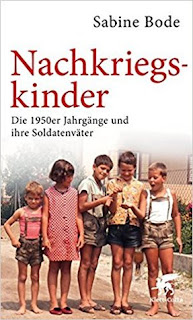
For German readers, I recommend, Nachkriegskinder: Die 1950er Jahrgänge und ihre Soldatenväter by Sabine Bode, (Klett-Coda, 2011) about the transfer of guilt between generations.  

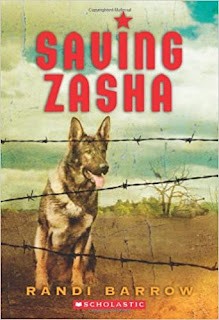
For young people, I recommend, Saving Zasha by Randi Barrow, (Scholastic, 2011) a story inspired by true events, of a young boy who tries to save a German shepherd dog from death in a Russia where anything German is hated, even dogs. 

Following rules can be so complicated when the rules are corrupt. 

Wishing the world peace. And hurry!


Christmas Milestones

After the war, my parents, like many involved in the Second World War, had a lot of catching up to do with regards to raising a family. My parents married in 1952, came to Canada in 1953, and I was born in 1954. I was an important piece of their dream for their new life in Canada. 

Homelessness had defined the first 35 years of my mom's life and she was eager to be tied down by domesticity. My dad, on the other hand, having lost his first two children along with his marriage during the war, was eager to rebuild what he'd lost. 

Little Gabi's first Christmas was spent in the Wolseley area of Winnipeg on Lipton Street. I cycled past the house this summer, imagining my parents fussing over this new little Canadian in their life. Little angel, I was not!

Christmas always seem to mark milestones in people’s lives. What will Christmas, 2021, be remembered for, sixty+ years from now? The final year of the COVID pandemic, or the peaceful year before things got really bad? Grateful for what I have, right now. 


Doing our Best

Throughout the pandemic, my personal disruptions have been mere irritants. I’ve not lost my job, I’ve not had delayed medical procedures, and I’ve not cancelled travel plans. I’m old enough to be retired, lucky enough to be healthy and grateful to be able to satisfy my need for novelty with local trips. I’ve also been able to meet new and interesting people via the internet. 

Canada's Human Rights Museum, Winnipeg
As an EAL volunteer with a local immigrant centre, I’ve learned about faraway places. Mostly, I’ve learned that people are people, no matter what their home language might be or the nature of their government. Through them I get a human view of current affairs, but it also helps me appreciate history. Just as cultural and political environments shape a person today, so it shaped the people of the past. As someone who’s often immersed in the past, it’s empowering to recognize the humanity of us all. Whether Chinese or Ukrainian, living in a fascist country or a democracy, we all have the same range of emotions, basic needs and desires.

The opportunities that this pandemic, through the magic of modern technology, has given me to connect one-on-one with newcomers to Canada makes me again appreciate the choice my own parents made back in the fifties. Engaging with current immigrants, whom I admire for their courage and their hope, reminds to never be complacent about the opportunities in this country. 

Imagine living in China where the work motto is ‘996’. That’s shorthand for working from nine until nine, six days a week. Imagine living in Ukraine where in some towns, it's cheaper to get a fake vaccination certificate than an actual shot . . . a country where no one trusts that what the doctor injects in you is in fact a vaccine and not some random liquid. Imagine living in Russia where my new release, Tainted Amber, would be banned because it depicts Nazi youth on the cover and might distort Russia’s determination to revise the Stalin years. A new piece of legislation,  Federal Law No. 280-FZ , was enacted in Russia back in July which forces bookstores to pull offending materials.

I know that Canada has problems. Lots of problems. But we’re trying. Aren’t we? 


Immigrant Story

Josepha, a picture book (written by Jim McGugan and illustrated by Murray Kimber), is a 1994 Governor General award winner. (Originally published by Red Deer in 1992 and republished in 2012). It's a poignant story of a fourteen-year-old immigrant's shaming back in 1900 and it struck a chord with me. Even though I started school as a kindergartner, a full sixty years later, I still remember being shamed because of language and culture. I'd never considered how much more difficult it would have been for a fourteen-year-old. 

The illustrations in this book, set on the prairies are full of deep, rich colours, always highlighting that 'land of the living sky' . . . so aptly expressed on Saskatchewan’s vehicle license plates. 

The spread with the British flag on the schoolhouse especially resonates with me. What a British-influenced education it was for Canadian immigrant children, even in the more recent sixties. Along with the images, the actual words are emotive and insightful. My favourite ones: "But Josepha's face darkened. Lightless as the window in his family's sod shack . . . " and then, "This was the way for all of them, those older ones. One year, shamed. Maybe two. And then they'd be gone from class. They'd be gone forever."  I should pay more attention to picture books. Why should they be only for kids?
Volunteering with EAL students helps me appreciate the vulnerabilities of current immigrants and this picture book reminded me that shaming is current and that it can be crippling. No doubt shame has also impacted the Residential School survivors . . . with a history of being outcasts in their own country and it continues to be felt by newcomers who are, on the one hand, grateful to Canada for a safe life, but then shamed by their ‘otherness.’  Now, with the pandemic, there is a subtle shaming and discriminating against Asians, even here. Our country has opened its door to immigrants but we, as individuals, must be on guard not to let misguided fear close our hearts. The subtleness of shaming makes it a powerful and painful weapon. Some royal watchers might agree. 


Brotlose Kunst


Canada is a country of immigrants and so on I Read Canadian Day, I think it’s important to ask what we’re reading. I know that I sorely missed my own ‘Canadian’ reflection in the books I read as a child. Now, when I volunteer with immigrants, I recognize that there’s an inevitable lag in reading one’s own story in mainstream literature. After all, many immigrants come here seeking economic improvement and becoming an author is no guarantee of financial stability. Others come to Canada as refugees . . . like my parents did in the 1950s.  Writing memoirs wasn’t on the top of their to-do list either. They had a language to learn and travel debts to pay off. (Yes, refugees coming to Canada had to repay the boat trip.)


Immigrant parents like mine, regarded literature as ‘brotlose kunst’ (bread-less art). It was beyond my family’s comprehension that I would study literature for eight years at university. 

When it comes to reading Canadian there might be a necessary generation gap before telling the stories of the immigrant population that makes up modern Canada. And, the First Nations of this land, robbed of their very identity, have also only just begun to use our book-method of telling stories. I appreciate that I Read Canadian Day is more about the struggling publishing world than it is about the empowerment of readers through stories. Balanced financial books are a prerequisite for a thriving publishing scene. But on this I Read Canadian Day, I want to reach out to those still unpublished, perhaps unwritten or even untold, stories that lurk in our diverse population. 


By the way, this week I’ve been reading Marsha Skrypuch’s book, Don’t Tell the Enemy. It’s about how  Ukrainians were murdered by Germans. Marsha comes from the Ukrainian background, I come from the German background. Here we are, in Canada, on I Read Canadian Day, telling the stories that our extended families handed down to us. I've also recently read two other books telling stories written by children of post-Second World War immigrant Canadians. Michelle Barker's My Long List of Impossible Things and Secrets in the Shadows by fellow Ronsdale author, Heige Boehm. 


This is what Canada has given us . . . on I Read Canadian Day . . . I am grateful for international, intergenerational Canadian stories. 


Recent Posts

Writer's News

I’m darn happy to share a bit of my writerly journey on a podcast, ‘ A Writer’s Life ’ hosted by the gracious and fabulous host, Heige Boehm...