Showing posts with label Volhynia. Show all posts

a dangerous faith

I’ve no regrets or doubts about dropping out of the German Baptist faith community in which I was raised … a community my adult-self considered stifling, narrow-minded and judgmental. Yet right-wing evangelicals still thrive as they continue to feed people’s needs for spiritual support and I admit that my upbringing has continued to influence me. For example, I learned to study words and to read between the lines.  We would pour over literature, aka, the ‘Word of God’ and try to interpret its meanings. Pastors could deliver hour-long sermons about a single verse. So it's not surprising that I did two degrees studying literature, albeit from secular sources.

Neudorf Baptist Church in Volhynia
A hundred years ago, there were about 200,000 Germans in Volhynia and at least 50,000 were Baptists. (Volhynia is a triangular area northwest of modern Zhytomyr). In the town of Neudorf, a huge red brick Baptist church was built back in 1907. During Soviet times it became a grain storage facility. In nearby Heimtal (now Yasinuvka), 50 km NW of Zhytomyr there was a German training seminary and teacher’s college, built around the same time. Yes, a hundred years ago, the German Baptist movement was thriving in Ukraine.

By the 1930s, however, under Stalin’s collectivization, things had drastically changed. My grandfather, ex-kulak, was a homeless fugitive hiding from NKVD authorities when he was arrested one final time on June 3rd, 1937. With a Bible in his possession they had enough evidence against him to find him guilty of treason … and he was finally executed in September. 

Today there are about 100,000 Ukrainian Baptists in Ukraine. Again, they are threatened and persecuted. Their enemies are no longer Soviets with a hammer and sickle flag. Now its Russian authorities who feel threatened by this small evangelical movement that just won’t be beaten.  Recent new clips show Baptist churches being vandalized.  Being a Baptist is still a dangerous thing.

Yesterday I did a book talk with a small group of Baptists from my former immigrant church. They know little of their own family histories. Many of them were only children when they fled war-torn Ukraine, Poland and East Prussia. Their memories are small memories ... like hiding in a closet as homes are vandalized or picking maggots off of horse meat or stepping around dead bodies. They clutch their faith like a child holds a teddy bear. I can only listen and try to imagine. And pray for today's victims of war.  We can all pray.


Volyn is not Volhynia

Having read a couple of books recently set in Volhynia, I’m reminded again of its complicated past, influenced by different political, religious and ethnic groups.  I need to refresh my frame of reference and look at a map.  My great-grandparents, ethnic Germans who were originally Lutheran, moved into Volhynia in the 1860s from the Gdańsk area (then called Danzig) and later converted to Baptist. 

Zhytomyr Oblast in modern Ukraine

        My grandfather was born near Zhytomyr (about 150 kilometers west of Kyiv) in the 1870s.  At that time, the city was considered part of the Russian Empire. When my mother was born in 1919, Zhytomyr became the capital of the short-lived (1917-1920) Ukrainian People’s Republic. By the time my mom turned one, Zhytomyr was part of the USSR. Their family farm, centered around the hand-built windmill, labelled them state enemies, or kulaks, by 1930. 

On the maps, the 2 oblasts are separated by the Rivne Oblast. There are 24 oblasts (provinces in total).

Volyn Olbast in modern Ukraine
My extended family —most of whom were targeted through exile, arrest, and execution, had lived in a scattered community of German villages which were dominated by a zealous evangelical Baptist faith. (One that my mother continued to embrace here in Canada in the 1950s).  The Germans in Volhynia built a faith-based seminary to train their own pastors in Heimtal (remnants still standing), to compliment the existing one in Odesa.  They also built a central red brick church in Neudorf (1907) one of the biggest churches in the area. Times were booming for the Baptists and the farmers … until Stalin’s First Five Year Plan to collectivize farms.

Today, the area known as the Volyn Oblast is further west and my mother’s territory is part of the current Zhytomyr Oblast. Other main centres in the area included Pulyny (called Pulin by the Germans) and Koresten to the north (300 km from Chernobyl). 

It’s all confusing and I keep messing up.  With the current war, all that messed up history stirs up memories of past injustices. So hard to keep one’s self-identity when names of your home are in flux and your people have disappeared. 

No wonder my mother never knew if she was German, Russian, Ukrainian. No wonder she embraced her faith and later, being Canadian.  


Remembering Don Miller, 1932 - 2023

Don Miller, May, 2004, Kyiv cemetery
I’m quite certain that I would not have found my family stones in rural Ukraine if it weren’t for this man, Don Miller. When I’d first worked out the spelling of my mom’s home village and entered it into a search engine on the computer (back in 2003 computers were still magic machines), I’d come to Don’s website, In the Midst of Wolves. I emailed this man from Oregon, a retired Baptist minister, and asked if he’d heard of Federofka. (Again, checking and rechecking the spelling. It was all so foreign-sounding back then). His reply, Federofka? I go there almost every year! Suddenly, my mom’s murky past was a place in real time.

I was very much affected by the incredible research he did into the German Baptist settlers of the Volhynian area around Zhytomyr. HIs first book, In the Midst of Wolves, A History of German Baptists in Volhynia, Russia 1863-1943, (self-published in Oregon in 2000) introduced me to the world of my mother's family and to the rural farming world of Ukraine. 

In 2004 I traveled to the Zhytomyr area with Don as our roots tour guide. Through his local connections, I visited what were then isolated, poverty-stricken villages. I got to talk with an old woman who remembered my mom's family and the location of the windmill. I got to access the restricted secret police archives and found my grandfather's signature on interrogation documents. The vibrant world of the kulaks had been destroyed during Stalin’s First Five Year Plan. With the fall of communism, the collective farms were, by 2004, also a thing of the past. Don opened doors for my research as he dug deeper into the NKVD (former OGPU) secret police files.  His next book, Under Arrest, came out the same year.


It was the cover of Under Arrest that led Don and I to discover our family connection. His uncle, Heinrich Mueller, on the cover, adopted my mom’s cousin, Sofia (Sophie), on the cover. Like my grandfather, Don’s uncle was one of the many men from the area executed during the Great Terror. And so Don and I shared an intense interest in this region and these times. 

See photo of Don talking with old woman in my mom's home village. The old women remembered ...collectivization, deportation, Holodomor, Great Terror, Chernobyl, and on and on it goes.

But Don’s legacy isn’t simply about the past. Even as he researched past crimes, past atrocities, he offered support for contemporary injustices. I’m mostly aware of the homes he established for aging and isolated widows. But there was so much more he did to help those willing to try through the creation of Samaritan Ministries of Ukraine (SMU).

Don believed in people and he believed in God. These passions were contagious and he will be sorely missed, but I’ll continue to be empowered by the force of his life. 

Don Miller died May 4th. He was almost 91. 


On Mom's Trail


(This is a copy of an article I prepared for SGGEE (Society for German Genealogy  in Eastern Europe) It can be found in its most recent journal, available to members only. (Vol. 24 No.1  2022 March). 
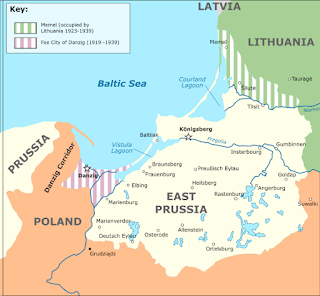
creative commons
It’s long been an ambition of mine to physically retrace my Volhynian-born mother’s footsteps. With Don Miller’s guidance, I started at the beginning, in Federowka, 35 kilometers northwest of Zhitomir. That’s where the storks dropped off Else Ristau back in 1919. On that roots tour, in 2004, I visited Zhitomir’s secret police files and perused documents which convicted my grandfather—former windmill owner, Eduard Ristau—as a class one kulak, guilty of counter-terrorism.  I viewed the ditch where they dumped his body in the fall of 1937 during the Great Terror and even looked for happier times in nearby Pulin, where Mom was allowed a sip of her father’s dark and bitter beer. Most dear to me were the granite remnants of the Ristau windmill discovered with the help of Helene Nickel, an older woman in Federowka. I tucked a piece of its red granite base into my mom’s pocket when she was buried later in 2011.   
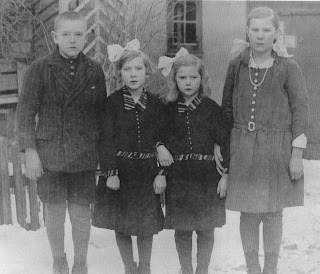
Kulak orphans in Kreuzburg


That 2004 trip became an important turning point for my sense of self.  Growing up here in Canada, without much of a history—my mom having only a confused and limited point of view of what she’d been through—had left me feeling untethered, detached and without a true identity. With the help of SGGEE, and much reading, I now have a rich inheritance and a much stronger appreciation of my place in this chaotic world affected by war, social unrest, and now, even a pandemic.  How rich we are when we discover our past. 

My mom survived her Siberian exile as the child of a kulak and in 1932 ended up with Ristau relatives in Kreuzburg, East Prussia (now Slavskoye, twenty kilometers south of the present city of Kaliningrad). In the fall of 2019, I cycled through these East Prussia parts of my mom’s life. 

The former Ostpreussen (East Prussia) no longer exists as a political entity. Germany’s easternmost province is now divided amongst Russia, Poland and Lithuania and while Lithuania and Poland have prospered in the thirty years since the fall of the Soviet Union, the tiny Kaliningrad Oblast continues to be a rather forlorn part of eastern Europe—a place for Putin to test his missiles within shooting range of the rest of Europe. 

The guided adventure began in Riga, Latvia and we alternatively biked and drove down to Klaipeda, Lithuania. Klaipeda, once the German city Memel, sits right on the Baltic. There we admired a statue of Ännchen von Tharau. (Germans might be familiar with the famous folksong about her.)  Back in the 1930s, her statue had incensed Hitler when he realized she had her back to him while he orated a victory speech from a balcony overlooking the public square. 

From Klaipeda, we took a ferry across to the Curonian Spit—a scenic ninety-eight-kilometer long strip of ecologically-fragile land, a Unesco World Heritage area, divided between Lithuania and Russia. On the Spit, we encountered huge drifting sand dunes, wild boar, and migrating birds. It was during my 2004 trip to Ukraine with Don Miller that I learned to appreciate birds . . . especially the storks and the cuckoos. Our East Europeans ancestors were closely connected to nature and this is reflected in their culture—including their songs, poems and memories.

Our small group (there were six of us) stayed overnight in Nida (Nidden), a resort town made famous by Thomas Mann who spent several summers there, and established a writing colony, after receiving the Nobel Prize for his novel Buddenbrooks in 1929. Later, the Nazis confiscated his place and turned it into a convalescent home for recovering Air Force officers. My father, himself at one point an injured Luftwaffe officer, was never amongst the privileged elite . . . a good thing, I’d say.

From Nida, we continued to the Russian half of the Spit. While there was only a modest entry point, it felt intimating entering Russia on a bike. The border guards took their job seriously with fearsome-looking guns and barking dogs. I was grateful for our multi-lingual guide who got us safely across and I’m sure he was grateful, too.

The difference between Lithuania and Russia on that Curonian Spit was felt as soon as we used the park washrooms. I preferred the natural setting of the bush (even with the stinging nettle or possibility of wild boar), to the filth of the offered outhouses. And yes, we did spot wild boar, along the road as we cycled. 

In spite of the dirty washrooms, this part of Russia had an inviting rustic charm. We stopped in Rybachy (formerly Rositten), which had been a renowned German migratory bird research station and is still used by Russian naturalists. Climbing the sand dunes was an amazing—and exhausting—off-road adventure. Because of the delicate nature of the dunes, we needed to stay on marked paths. Entire villages have been buried by the drifting sand dunes over past centuries. Good luck finding clues to ancestors in those villages. 

Our first night in the Kaliningrad Oblast was in the former spa town of Cranz (now Zelonogradsk). This area along the Baltic is also known as the Amber Coast—and yes, I hunted for amber—unsuccessfully. Later I bought some at one of the ubiquitous kiosks selling very affordable amber jewelry. 

Aside from natural beauty, the German influence is still strongly reflected in the architecture of Zelonogradsk. While Russian corruption or confusion has left some of the modern beachfront hotels indefinitely unfinished, old German villas offer a laid-back ambience of a past era. Trains in the 1930s had regular-scheduled, heavily-used routes for the East Prussians to enjoy the Baltic Sea breezes. 

It’s nearby along this same coast, by the Palmicken amber mines (now Yantarny) that Nazis forced thousands of Jews into the icy Baltic back in January, 1945. So much history, so much loss, along these scenic shores. Unlike visiting Ukraine, where a woman tried to spit in my German face, I found more awareness here of the positive aspects of German influence. 


On to Kaliningrad, the capital city of the Kaliningrad Oblast. Known as Königsberg since 1255, and the birthplace of Immanuel Kant, the city was decimated during the final months of the Second World War. My mom had shared tales of using the city tram and of window shopping in the once prosperous city. My personal obsession here was to eat Königsberger Klopse in a local restaurant. 

There’s little in Kaliningrad to remind a German tourist of the past. This was Stalin’s intent and he’s succeeded. However, The Dom next to Kant’s memorial, has recently been rebuilt. Even the Russians. . . transported here to replace the exiled Germans . . .  admit that Königsberg was once beautiful and embrace its complicated history. I felt overwhelmed with a sense of loss.  The brutalist House of the Soviets, (behind me in the photo), was built in the seventies to replace the war-damaged Königsberg Castle. It’s never been used or even finished. Back home, when I shared my trip with an older German woman who’d survived the devastation of East Prussia, she reminisced about how the chestnut trees began to bloom in January, 1945 because of the heat from the fighting. Now the downtown core was mostly concrete and traffic.

I’d prearranged a side trip while staying in Kaliningrad to visit the former Kreuzburg, my mom’s hometown during the 1930s. Now called Slavskoye, it’s about 20 kilometers south of the city.  We drove, rather than biked, to this town and upon retrospect, that was a bad choice. The traffic jam, leaving Kaliningrad city, was terrible. Did everyone have a dacha out in the countryside? Our Belorussian driver, Igor, slowly inched past the modern sports stadium built for the 2018 World Cup.  He didn’t hesitate to use his horn or even boulevards as necessary. Finally, we were out. 

Unlike the city which was rebuilt with the ugly Soviet-style concrete monoliths, rural areas of this oblast are marked by derelict ruins leftover from the German years. I was especially charmed by more of the majestic linden and chestnut trees lining the roads. Like the birds, trees and perennials tell stories of past generations. This was the East Prussia I had visualized. All that was missing were the Trakehner horses for which East Prussia was once famous. 

Similar to making family connections in Federowka back in Ukraine, I felt myself nervously anticipating what I’d find here in this hometown—this neglected time-warp of Europe—wedged between the past and the future. The Germans had all been forcibly expelled after the war and the area had been repopulated with unmoored people from the rest of the Soviet Union. A lot of the good, arable land still lies dormant—beautiful but wild. 

I was delighted to walk down the broken cobblestone main road of the former Kreuzburg and thrilled to later find the house where my mom found shelter with East Prussian relatives. Yes, the house my uncle had built in the 1930s was still standing. Earlier, I’d discussed its location with my one surviving cousin now living in BC.  “At the end of the road, in the ‘Schul-siedlung’ (school neighbourhood) with a well in the front,” she’d told me. We asked for help along the way and found it, just like she said. 

Second World War bullet holes still marred the house exterior, but on the whole, the house was lovingly looked after by an old man resettled from Kazakhstan who was proud to walk us through his beautiful garden. Time restraints, on account of the previous traffic jam, forced me to decline his offer for tea inside. His curious neighbour, her yard boasting a tree of ripe apples, was also curious about us. Wonderful people and I would never begrudge them my family’s former world.

Not far from the house stood the school my mom attended. The outside, still bullet-pocked and neglected, appeared to be used as an apartment with several residences. According to reports I’d read, by February, 1945, the Wehrmacht had sought shelter in the school while fighting off the Red Army. The village has an extensive graveyard for the fallen Soviets who died far away from their own homes here on what was once German soil.  Meanwhile, my mom’s younger brother, who disappeared during the last months of the war and ended in a Soviet camp, was never to have a marked grave. Such is war.

Our bike trip continued the next day and we cycled out of Russia into Poland. At one point, we cycled parallel to what was left of the Autobahn Hitler had started building for his Volkswagon. The Berlinka would have connected Königsberg to Berlin. Somewhere nearby would have been Stablach, a military establishment with a munitions’ factory. My mom worked there, and lived in its barracks throughout the war, cycling the eight kilometers back to Kreuzburg for visits. 

It didn’t us take long to reach the Polish border crossing at Mamonowa (the former Heiligenbeil) where we waited for hours as vehicles around us were taken apart. Dogs sniffed through everything. When it was finally our turn, our Canadian passports were greeted with a smile and a quick wave through.

In the winter months of early 1945, there was a different kind of slowdown on these roads. Back then, the snowy woods and pathways would have been jammed with military vehicles going one way, and mothers and children pulling all they could, the other way. Civilians tried to reach the ships waiting in harbours along the Baltic. They crossed over the icy, slushy Frisches Haff (Vistula Lagoon) from small towns like Frauenberg (now Frombork) to reach Pillau so they could board ships like the Wilhelm Gustlaff or the equally doomed, Goya or Steuben.  These ships offered them an escape from the Soviet tank armies, but not necessarily the Soviet Navy. More than fifteen thousand, mostly women and children, drowned in the icy Baltic in those early months of 1945.

It was misty, the day when I looked over the Vistula Lagoon . . . a brackish strait of water that in 1945 froze because of the extreme cold. It offered a welcome shortcut to the ships. I imagined the broken wagons stuck in ice as the low flying Soviet bombers strafed the desperate civilians. A poignant moment for me.  
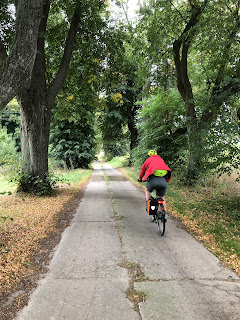
My mom and her sisters, however, never made it as far as the Vistula Lagoon. They were stopped by Red Army soldiers somewhere in the woods along the trails that I cycled. For my mom, it meant transport back into the Soviet Union of her childhood. It meant more than two years of forced labour in an open pit mine in the Urals. For her sisters, it meant working on a Soviet kolkhoz near Drobrovolsk (Pillkallen or Schloßberg) until 1949. As I cycled through the scenic beech tree woods, I had much time to ponder their loss of freedom, lots of time to imagine the bodies of the hastily buried under snow in the ditches along the way. Lots of time—especially when the cycling trail was uphill!

Cycling is a great way to appreciate a landscape and because I grew up with the echo of Ostpreussen in my ears, it felt a bit like going home. While we can’t travel now, we can research to make a future trip more meaningful. After all, genealogy and travel go together like good cousins.


Red Stone Bleeding

My mom (born 1919) grew up in the Volhynia area (150 kilometers west of Kyiv). Back then, it was home to a mishmash of cultures. Russian, Ukrainian, Polish and German farmers got along with each other, living side by side. They spoke each other’s languages, their children played with each other and they all dealt with the same fickle weather. The rich earth of the area didn’t care who was harvesting its grain. The wind blew, the rain fell, the sun warmed them all equally. 

From painting in a small Koresten, Ukraine museum

True, they might have worshipped in different churches, spoken different dialects in their homes, had different wedding customs and recipes, but they didn’t need weapons to solve those differences. It was Stalin and his secret police (OGPU, later NKVD) who can be credited for creating conflict in the tiniest settlements, or amongst families.  After the forced expulsions (my grandfather went through two expropriations, first in 1915 during the Great War, then again in 1930), then the 1917 Revolution and its ensuing civil war, there were a few years when the area was relatively peaceful. Those were the good years when my mom had a happy, but brief, childhood. The storks delivered babies, the windmill was built, there was a local church community. Communism, at this point was not a threat, but a support. The Soviets encouraged German peasants to build their own schools, churches and even a seminary for their pastors in Heimtal, near Zhytomyr. (I got to wander through those red brick ruins when I visited back in 2004). In A Biography of No Place, Kate Brown writes, “By 1926 there were eleven officially chartered minority regions in Ukraine, and nearly 300 nationally autonomous villages.” (page 20) 

After Lenin died in 1924, however, communist idealism was gradually replaced by Stalin’s ambition. The 1929 decree to liquidate the kulaks forced collectivization upon the family-minded peasants and violently broke up my mom’s home. Suddenly, there were enemies everywhere. German farmers were now labelled tight-fisted, or kulaks. After collectivization and the first Five Year Plan had been implemented, Stalin turned paranoid and started killing everyone around him. The assassination of Stalin’s close friend, Kirov, marking the beginning of the Great Terror/Purge. My German-speaking grandfather, was executed in 1937 as an enemy of the people under Article 58. His crime? My grandfather only wanted to leave the country and rejoin his orphaned children. 

And now we’re in 2022. Putin wants Ukraine to be part of his Russian family. He loves Ukraine so much that he will kill them all to keep them in his sphere of influence. What would King Solomon advise? Kill a child so that no one can have it?  And those in Russia who oppose him are threatened with 15 years imprisonment. 

Putin, Stalin, Hitler. Madmen again attacking the defenceless. No wonder the soil of my mother's home near Zhytomyr is so red. The red granite bleeds once again. 


Red Stones. All that's left of my grandfather's windmill

Ode to the Linden Tree

I noticed a social media post about it being National Tree Day yesterday, September 22,

(different day in every country) and thought I’d share, a day late, a bit about one of my favourite trees, the linden. 

Thirty years ago, I’d planted a linden tree in my garden because it reminded me of my mom. I remember a song she would sing about the linden tree and it seemed to me that my sparsely treed garden in suburbia wouldn’t be complete without the nostalgia of a linden tree. The sapling has grown big and strong. It’s graced my garden with spring blossoms, summer shade and amber fall colours. Squirrels, blue jays and various migrating birds seem to love it, too. It lends support to my summer clothesline and could have been a perfect hammock supporter if I’d been clever enough to space the trees properly. But that’s okay . . . the green ash and Manitoba maple have assumed that job. 

When I travelled through the former Volhynia in current-day Ukraine, our roots group was led to aging, broken lindens . . . damaged by war and by lightning strikes. Thick stumps stand as markers to past villages and lived lives. In The Kulak’s Daughter (aka Red Stone), it’s blossoms of the linden tree that help sustain the exiled family in Siberia by brewing linden tea.

In my own garden, the linden tree also stands as a measure of time. Three decades of raising three kids. . . weathering sunny days and storms, always growing . . . reaching up towards the light.

Famous lindens in German culture include the Berlin street known as “Unter den Linden,” and the linden tree that marks Werther’s grave after his suicide in Goethe’s Die Leiden des jungen Werthers (a novel which had a big impact on me back in university along with most everyone who's read it!)

But mostly, when I think of lindens, I think of my mom, softly singing. 

Vor dem Haus steht eine Linde/Sie weht ihr Äst im Winde/ Da sitzen davor ein altes Paar/Sie sitzen als waren sie schon immer da/ Sie denken zurücke/an Jugend und Glücke/Vorbei, vorbei/Mein Schatz vorbei.

Translated:  In front of the house stands a linden tree/It waves its limbs in the wind/There sit an old couple/They sit as if they’ve been there forever/They think back/on their youth and their joys/It’s over, it’s over/My love, it’s over.

I’ve searched the internet for this song and have still not found it. I only have the snippet of these words and melody . . . sourced from memory. But like the linden tree itself, it’s rooted deep into my life. 


Reducing, Re-using, Recycling: Creating a Story


Mom was into reducing, reusing and recycling long before it became trendy. Clothes were patched and re-patched. Nothing was thrown out. Dresses became skirts, pillow cases or if I was lucky, doll clothes. Eventually they became rags. Zippers and buttons found new uses. So it was with everything in our house when I was growing up. There was no waste. And now, I’m into recycling her life. Making it into something new. Unravelling it and re-knitting it

Katya is eighteen in Tainted Amber. She’s all grown up. She’s independent. She’s naïve and a bit insecure; tenacious and curious. I am my mother’s daughter and in the compost pile of my writer’s mind, our lives become one. While it’s her stories that I’m reducing, reusing and recycling, it's my imagination that feeds them.  The result? Tainted Amber. A love story created from the leftovers of my shared experiences with her.


Recent Posts

Writer's News

I’m darn happy to share a bit of my writerly journey on a podcast, ‘ A Writer’s Life ’ hosted by the gracious and fabulous host, Heige Boehm...