Showing posts sorted by relevance for query Thomas Mann. Sort by date Show all posts

Thomas Mann and Nida

On my Baltic biking itinerary is an overnight stay in Nida, Lithuania—a small beach town on the Lithuanian half of the Curonian Spit. The Germans called it Nidden, and it was the summer retreat of Thomas Mann. His books were later banned by the Third Reich—in spite of being a recipient of the 1929 Nobel Award for Literature—and he left by 1933. Supposedly the Nazi government mailed him a charred copy of his novel, Buddenbrooks, and he quickly got the message. 

Wojsyl, 2005
In 1939, Herman Göring confiscated the house as a holiday place for injured Luftwaffe personnel. Nowadays, his restored cottage holds the Thomas Mann Cultural Centre and the community hosts an active writing colony. His grandson, Frido Mann, released My Nidden: On the Curonian Spit in 2012. Another book to read to help me appreciate the tortured history of this beautiful area. 

JonasS at Lithuanian Wikipedia
I studied Thomas Mann years ago when I majored in 20thcentury German Literature. It’s crazy how all these years later, I’m still reading his work. Thomas Mann loved the landscape on this Amber Coast…the sand dunes, the salty wind, the Baltic. 

In my WIP, my character—Katya—loves it, too. And I’m on pins and needles with anticipation to experience what I have until now only imagined. 

Thomas Mann in Nida


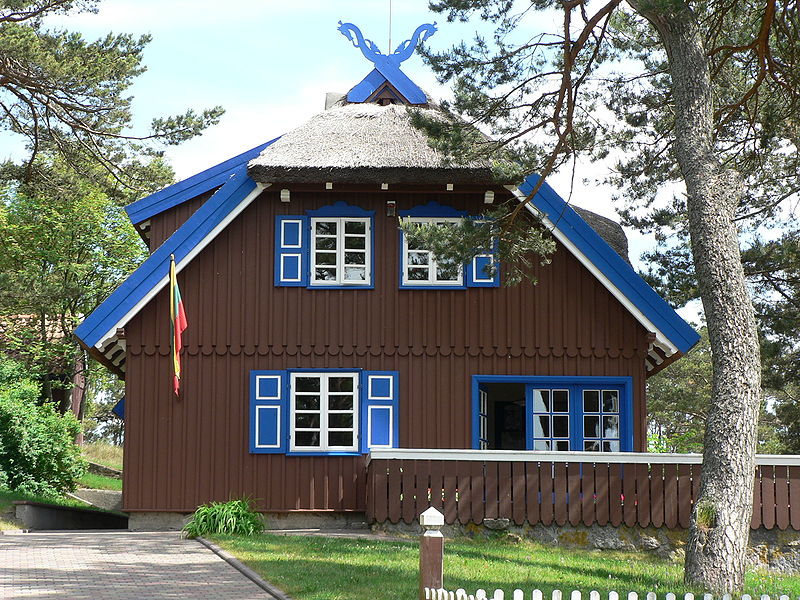
Who doesn’t like spending summers at the beach? Life is short, and summers even shorter.  The 1929 Nobel Prize winning author, Thomas Mann, liked to spend his summers on the Baltic, in Nida with his young family. The beach town is on the Curonian Spit, a narrow piece of sandy land jutting out into the Baltic Sea. His summer home at 17 Skruzdynės Street has now been turned into a museum. Not only is his house a museum, but the Nida community supports an artists’ colony just like back in the early thirties.


Nida (called Nidden by the Germans), with less than two thousand inhabitants, was much smaller than the mainland tourist towns, formerly called Rauschen or Cranz back in the '30s. While the names have changed, sand dunes still range up to fifty meters high.   (Photo: Bernd Rostad http://www.flickr.com/photos/brostad/9614129325)


File:Nida ThomasMann cottage.jpg
Thomas Mann home, Wojsyl, 2005

The town first attracted writers back in the 1800s. Soon they were joined by other artists and intellectuals, especially those from nearby East Prussia.  I'm certain that my character, Katya, would have loved to have been a student in this colony. After all, she didn't live too far away and she'd read Thomas Mann's novellas. But Mann left the area in 1933 after his books were banned by the Third Reich. A few years later, during the war, his summer home became a retreat for convalescing Luftwaffe pilots. (Would it be possible that my own father spent time there, healing from his 1941 plane crash? I somehow doubt it...he was rather low-ranking, but I'll never know.)

After Lithuanian independence in 1991, the Nida Art Colony (NAC)  has been revived. May the sand dunes, the Baltic waves, and the wind continue to inspire art. It's inspiring me...and I've not even been there.

Writing Retreats

Photo taken from Mann's
office in Nida
Back in September, 2019 I looked forward to visiting Nida, Lithuania once called Nidden, Germany. Located on the idyllic, sand-dune covered Curonian Spit, the sleepy beach town of Nida, still honours the summer retreat of Thomas Mann. It’s a town he had to evacuate in 1933 when the Nazis delivered a charred copy of Buddenbrooks to his residence. 
Mann and his family in then 'Nidden'


I was enchanted by the view from Mann’s writing space in the picturesque blue cottage. Many writers like a natural setting while they write. The internet is full of exotic locales set deep in the woods or on beach properties to entice the muse. But for me, it's usually my own backyard that provides a natural setting for my creativity.

I often have to share 'office' with Tiberius, the cat

The ironic thing is, once a writer is in the ‘zone’ his or her surroundings dissolve as the story takes hold of the mind’s eye.  I might be sitting and watching the squirrel chasing the chipmunk when all of a sudden, I’m in a car catching the dialogue between two arguing parents as I’m transported to the other world of my novel-in-progress. 

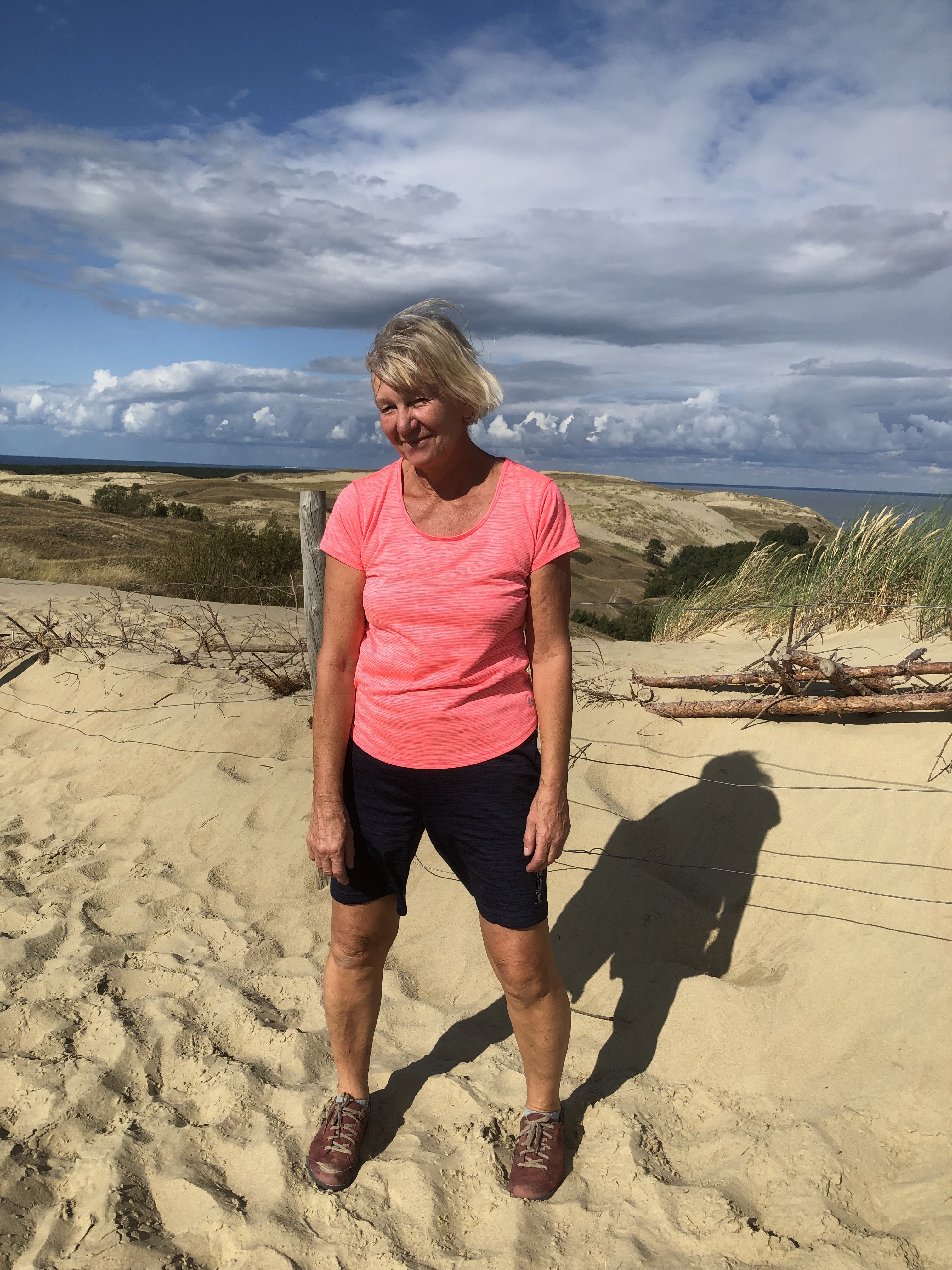
Walking sand dunes near Nida

I wonder what Thomas Mann saw looking out of his studio upon the Baltic lagoon? Did he see the crashing waves of political upheaval coming into his country? He called it the Italian view. Did it remind him of his novella, Death in Venice, published back in 1912 before he even went to Nida? 

It seems ironic, but as writers we’re influenced by our surroundings even when we ignore them. I’m heading out to my favourite writing place this coming week during this season of decay and change. I’m confident in its power to inspire me and somehow it will find its way into my stories. No doubt the waves from Lake Winnipeg’s rustic beaches will lap at the edges of my pages. 

Waves on Lake Winnipeg


Fear of Books

What do Ernest Hemingway, Thomas Mann and Helen Keller have in common? All three authors had their books banned and burned during the Third Reich’s campaign to control ideas through literature. Back in May of 1933, more than 25,000 books were burned during a one-day blitz by university students across Germany. Thousands more were pulled from circulation. Why were these writers so dangerous?

Hemingway?  His book, Farewell to Arms, showed the tragic side of war. For the Nazis, war was only positive.

Thomas Mann? Mario and the Magician warned about the dangers of dictatorship. Hitler saw democracy as weak. 

Helen Keller?  Her book was How I Became a Socialist.  The blind and deaf activist supported the weak and the disabled. Nazis could not tolerate anything less than their idea of perfect. 

And here’s a curious book that the Nazis banned:  Bambi written in 1923 by an Austrian called Felix Salten.  Two years later, in 1925, another Austrian publishes a book. It was called Mein Kampf.

Crazy? It happened in my parents’ lifetime. Nazi Germany was dominated by a culture of fear and mere words on a page could be dangerous.  It shows the power of books . . . 

In Tainted Amber, Katya reads Thomas Mann, inspired by the idea that he wrote in his summer home on the Baltic Sea not far from where she sat reading his novella. 

Here in Canada, books are now being published that tell our own country’s stories of abuse. Ronsdale Press, who’s publishing Tainted Amber, recently released  St. Michael’s Residential School by Nancy Dyson and Dan Rubenstein. 

Books share ideas.  It's up to us to give them power.  But sometimes books are only entertainment. Sometimes an orphaned deer is only an orphaned deer.


Beach Weather and the Amber Coast

Back in the 1930s, over in East Prussia…how would one spend a steamy hot day in August? Well, you might end up in a coastal spa town like Rauschen or Cranz. Both of these towns have been tourist magnets for hundreds of years.


Cranz (re-named Zelenogradsk by the Soviets after the Second World War and also known by its Lithuanian name of Krantas) sits on the Baltic Sea, about 34 kilometers north of the former Königsberg (now Kaliningrad). This part of the Baltic coast is also called the Amber Coast. The name, Cranz, comes from the Prussian word for coast and was once considered a royal spa town. The sleepy little fishing village soared in popularity when Cranz got a rail connection to Königsberg in 1885 and its population reached about 6000 in the 1930s… doubling in size during the summer months.  

Tourists could soak up the sun on sandy, white beaches, hike along the many sand dunes, or promenade along the town’s boardwalk.  Kiosks dotted the beach selling locally caught smoked flounder. Spa treatments included aromatic hot springs. 

Along with the natural beauty and fresh air—tourists were treated to open-air concerts, dances, art displays and even fireworks. There were sailing regattas for boaters, equine events for horse-lovers, even gliding lessons for would-be flyers.

If staying overnight, a tourist could choose one of many bed and breakfast places, or stay in the Hotel Königsberg or Schloss am Meer (Castle on the Sea). 

In 1946, the Germans were expelled by the conquering Red Army and without them, the tourism industry collapsed. With the disintegration of the Soviet Union, Zelenogradsk is once again a booming seaside resort, this time attracting wealthy Russians. 


But if Cranz doesn’t appeal to you, you might—like the characters in my upcoming novel Amber Stone—consider a visit to Rauschen (now Svetlogorsk), high on the cliffs of the Amber Coast.  It’s down the coast from Cranz, 39 kilometers northwest of Königsberg and about twice the size. Rauschen was a tourist destination even before the railway which connected it to Königsberg in 1900. It became Svetlogorsk in June, 1947 and, like Cranz, continues to be popular with Russian tourists. (photo: Vladimir Sedach)

Today this Amber Coastline features two UNESCO World Heritage sites containing some of world’s largest sand dunes. It celebrates not only physical beauty, but teems with biodiversity…quite possibly Europe’s only remaining true wilderness.    
                                                                             
Both these towns are on my travel bucket list. For now, I can visit them only through my imagination.  Of course if I do visit, they won't be the same beach towns that existed when my characters passed through. Time-travel happens only through books. 

1929 Nobel Prize winning author, Thomas Mann, liked these Baltic beaches too.  “They walked, and the long waves rolled and murmured rhythmically beside them; the fresh salty wind blew free and unobstructed in their faces, wrapped itself around their ears, and made them feel slightly numb and deliciously dizzy. They walked along in that wide, peaceful, whispering hush of the sea that gives every sound, near or far, some mysterious importance.” 
― Thomas Mann, Buddenbrooks: The Decline of a Family


Baltic Writers

Günter_Grass_(1986)_by_Erling_Mandelmann
I finished reading Günther Grass’s 2002 novel, Crabwalk, this week.  It’s translated from the German, Im Krebsgang,by Krishna Winston. Now, I might have a masters’ in 20thcentury German lit, but must admit, I’d never read any of his work. I was probably too obsessed with Heinrich Böll, one of my all-time favourite writers. What drew me to Grass now is Ruta Sepetys’s 2016 YA novel, From Salt to Sea. She includes a wonderful list of resource material at the end of her novel. 

Both books concern the sinking of the ship, the Wilhelm Gustloff. Both books cover territory that my own WIP touches on. Because the German title has the word Krebs in it, which means cancer, I'd missed the war connection. But the title refers to the wobbly, unsteady way a crab walks. And so it is, with the plot. 


I recommend reading both novels, end to end.  What makes Grass’s book so compelling is his ability to connect the dots, and then transfer the issues that led to the 1945 tragedy into a modern and relevant internet-based story. While Sepetys’s book zooms in on the tragedy of specific victims, Grass focuses on the bigger picture. He seems especially drawn to the man for whom the German luxury ship—used for German vacationers through the Kraft durch Freude —(or Strength through Joy program) was named. The man, Wilhelm Gustloff, was a prominent Nazi, who was shot in Davos, Switzerland by David Frankfurter, a Jew in 1936. Gustloff’s birthday was January 30, (1895) —fifty years to the day that the ship went down (in 1945), the same day the main character, Paul, was born, and the same date (in 1933) that Hitler became Chancellor of Germany, twelve years earlier.

Grass received the Nobel Prize for Literature in 1999. Another Baltic-based writer, Thomas Mann, received the same recognition back in 1929. Grass’s birth town was Danzig (now at #13 Lelewela in Gdansk) Poland while Thomas Mann had a summer home in Nida, Lithuania. More places to add to my Baltic itinerary.  Hope to share photos here on this blog.


Sandy Beaches on the Baltic

The Curonian Spit and the Vistula Spit…rich in history and natural beauty.


These two narrow spits of land—massive sandbars—in the Baltic near Kaliningrad, are shared amongst three countries. Both spits create lagoons. In January, 1945, when the weather of these unique beach areas was at its worst, German civilians struggled to flee the Soviet Army by crossing the lagoons to ships in harbor on the Baltic.

Curonian Spit
This is a 98-kilometer long, crescent-shaped, sand-dune-covered finger of land. Since 2000 it’s a UNESCO World Heritage site, and both Lithuania and Russia, who share the spit, have formed national parks…Lithuania on the northern half, and Russia to the south. (The Thomas Mann writing colony, Nida,—on the Lithuanian side—is the largest town). Tourism is carefully monitored to protect the fragile eco-system of the area.  (Map: H Padleckas)

The Curonion Spit (German: Kurisches Haff) harbours a fresh-water lagoon, known as the Curonian Lagoon, with the Lithuanian port city of Klaipeda at its northern tip. At its widest point, the spit stretches almost 4 kilometers, near Nida.  A single road runs the length of the spit, from Zelenogradsk in the Russian Obast of Kaliningrad, (German: Cranz) to Klaipeda (German: Memel), which is accessible only by ferry across a narrow strait. (Photo: A. Savin).


The Parnidis Dune is the largest dune on the spit at 52 meters high. Climbing is allowed only on designated paths to prevent too much sand movement. (Dunes by their very nature are always moving.) 

The Curonian Lagoon is home to diverse plant and fish life, which is threatened by pollution and algae blooms. (Like our own Lake Winnipeg.)

The area is at risk also because of natural threats like storms. In 2004, Russia began offshore oil drilling off the coast of the Curonian Spit which will further threaten this pristine natural setting.

Vistula Spit
Not much further down the Baltic coast, is the Vistula Spit. This peninsula, separated from the mainland by the Strait of Baltiysk (German: Pillau), is only 600 meters wide in some places. It shelters the Vistula Lagoon (German: as Die Frische Nehrung).  The Vistula Spit is divided between the Kaliningrad Oblast, and Poland and thus contains Russia’s most western point.
 
Poland plans to build a ship canal through the Vistula Spit to the Baltic.  The spit’s major tourist town is the Polish community of Krynica Morska (German: Kahlberg).

In the closing months of the Second World War, Germans attempted to cross the Vistula Lagoon in order to reach ships waiting in Baltiysk (Pillau) harbor. Soviets bombed the frozen lagoon making the crossing impossible for many women, children and horses. My mother was one of those attempting this risky escape. (Photo: German Federal Archives)


These beautiful, sand beaches have known their share of war and death. Beaches all over the world have welcomed invading armies or fleeing ones (I need to see the recent Dunkirk movie).


Recent Posts

Writer's News

I’m darn happy to share a bit of my writerly journey on a podcast, ‘ A Writer’s Life ’ hosted by the gracious and fabulous host, Heige Boehm...