The story behind Broken Stone


Let me share a bit about my upcoming release Broken Stone by Rebelight Publishing. It’s a middle grade novel, set like Red Stone, in the early 1930s. Broken Stone continues the exploration of my mom’s childhood.  The first book, Red Stone, (previously published as The Kulak’s Daughter) happens primarily in two places: Federofka, a tiny village 35 kilometers northwest Zhitomir (about an hour west of Kiev) and in Yaya, Siberia, in the Kemerovo Oblast (about half-way between Tomsk and Irkutsk). Red Stone, told from the viewpoint of an eleven-year-old girl, explores the impact of collectivization on a kulak family.

The sequel, Broken Stone, begins in the Soviet Union (again in the Zhitomir area) and moves to East Prussia. The children travel to the Baltic port city of Königsberg and then head to a small farming town called Kreuzburg (about twenty kilometers south of Königsberg) where they settle in with relatives.

One of the things that has made my research so compelling is that the homes of my mom’s childhood have basically been wiped off the map. Federofka, her birth town, is now Kaliniwka. Königsberg became Kaliningrad, and Kreuzburg is Slavskoye.  After 1945, East Prussia—a  former province of Germany—was divided between the Soviet Union and Poland. And so the Kaliningrad area, along with Slavskoye, is part of the current Russian Federation.

Thus, my mom’s past, before immigrating to Canada in 1953, was completely dismantled. Her father’s windmill was literally taken apart and used to build the new collective manager’s office. Her mother was buried in a shallow, unmarked grave in the frozen ground of Siberia, while her father, a victim of the 1937 Great Terror, was dumped into a mass grave along with thousands of other ex-kulaks. Only a few photographs and some archived secret police files give clues to a crushed past.

Mothers and daughters have, perhaps, one of most complex of human relationships. Ours was no different. By exploring my mom’s past, I’m basically trying to figure out what made her tick (and how that affects me). She could never tell a story of her life in a straight forward chronological order. It came out in bits and pieces, at the most unexpected times. My retelling of her childhood years under Stalin and then Hitler, is an effort to create narrative out of the jumble of emotion that underlines memory.

Broken Stone is about a broken family and a young girl trying to grow up with a foot in two strongly opposing political regimes. She’s torn between her father, still left behind in the Soviet Union, and her own future in fascist Germany. It’s a quiet story. The plot points belong to a girl in transition from childhood to adulthood, from communism to Nazism, from dependent to self-sufficient, from sad to hopeful. It’s also an attempt by me to give my own family some roots. I hope you like it. 

Book review: Forgotten Land Journeys Among the Ghosts of East Prussia


Forgotten Land: Journeys Among the Ghosts of East Prussia
Forgotten Land: Journeys Among the Ghosts of East Prussia by Max Egremont
My rating: 5 of 5 stars

I've read a view books about East Prussia, including biographies by Marion Dönhoff and Hans Lehndorff, a novel by Ernst Wiechert and histories by Andreas Kossert, among others. What made Max Egremont's book stand out was that it was written by an outsider, a non-Prussian and I appreciated his point of view. Yes, the book was a bit confusing, as it flitted between present and past, followed characters, dropped them, and then picked them up again. However I felt this was an appropriate style for a confusing place and time. Yes it was part history, part travelogue and it was immensely fascinating. It's only strengthened my resolve to journey amongst those East Prussian ghosts. Perhaps I'll find clues to my own mother's confusing teenage years. And oh, did I appreciate the enclosed map with locations identified by both past and present names.


View all my reviews

Who's Watching Whom?

Meandering down my favorite Harte Trail (the former Grand Trunk Pacific Railway), I'm always discovering something new. Nature is never boring. Blossoms in the spring, berries in the summer, colored leaves in the fall, and the peace of snow in the winter. But fall might be my favorite. The air is pungent with decay as my footsteps crackle over the dry leaves. This Great Horned Owl watched me as I watched him.


October is ghost season and while I grieve the loss of my dear dog, Buddy, I feel his spirit in these woods. Rest in peace, dearest Buddy.

Paving Paradise


My favourite farmer’s field is morphing into a new neighbourhood. This particular field grew my first paid article a few years back. I’d wandered through the July wheat as a thunder storm danced closer. Nature’s drama. My piece, published in the local paper, compared it to the fringe festival that was happening concurrently.

Now I’m not knocking change. It’s a sign of life. However, I couldn’t help but think of the song, “they paved paradise and put up a parking lot,” this morning as a cement truck rolled into the field just as a dump truck carried out a load of fertile top soil.  Turns out my neighbour was right: they scrape off the good soil, so it can later be sold back to the new home owners.


I picked a fall bouquet of wildflowers out there today. I never used to, but now I figure, it’ll all get bulldozed anyway. Later I might get charged to see them...in a plant museum. 

First Day of School


I read that in Russia, students bring flowers to the teacher and receive balloons in return. That sounds like it could be a lot of flowers!
File-German school-boy (Heinrich Bruno Wittig), aged 7, with schultüte & schulranzen, on his first day of school, Zeulenroda, 1936.wittig-archiv.jpg 
Over in Germany, it’s been a two hundred year tradition to give young students a large paper cone or ‘Schultüte’ on the first day of school. The cone is stuffed with candy, small toys and even (!) school supplies. The photo on the left dates back to 1936. (Zeulenroda, Wittig Archiv).

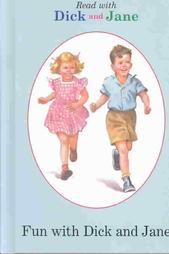
That tradition was not part of my life here in Canada. I remember the mixed emotions of my first day at kindergarten. I couldn’t speak English. My mom arranged for an older girl from the neighbourhood to pick me up and deposit me at the school. I remember the other girls’ pretty dresses, but have no memory of my own. I do recall, though, that by grade one I’d become quite comfortable with Dick, Jane, Sally, Spot and Puff.  And that’s where the wedge between my double life began. There was my German immigrant family at home and my English language world of books. As I grew, so did the rift.  So I have some empathy for the issues facing new immigrants and their children starting school here in Canada.

Now-a-days, back-to-school often means a fancy licensed backpack with matching school supplies.  An expensive time for parents, especially those with several children. We live close to a school and when I see the kids walk by, holding a parent’s hand, on these first days, I get nostalgic for my own kids’ schooldays. However, my bank account appreciates the end of back-to-school.

I used to take time off work during the week of back-to-school, just to be there for any jitters or tears or happy cheers. Kids facing the world on their own.  A special time for them. A learning-to-let-go (just a little) time for parents.

Now, it’s just me and Buddy watching the foot traffic eagerly skipping by on their way to school.  Happy first day to all!

The Beaverbrae


More than a quarter of a million displaced Europeans came to Canada after the Second World War. My parents traveled as newlyweds on the Beaverbrae, a converted freighter, in 1953. They left Bremerhafen and arrived in Quebec City on July 20th along with seven other family members. These included my mom’s brother and his wife and two adult children, my mom’s sister and her new husband, and my mom’s single sister. 

These nine people had all gone through horrendous things—and it wasn’t all connected to the war. My mom’s family had been kulaks in the Soviet Union and so their troubles started back in 1930 when the farms were collectivized. They’d made their first refugee trek back in 1932 to East Prussia. Later, they tried to flee the Soviet army in 1945 when it advanced on East Prussia, but were unsuccessful. Today that part of eastern Europe belongs to Russia and Poland.

Their troubles didn’t end with the war.  My mom was a POW in a Soviet labour camp in the Ural Mountains until 1947, while my aunts and cousins worked on a kolkchoz until 1948. The time under the Soviets was something my aunts refused to talk about it.

When they were allowed to leave East Prussia, they entered the Soviet zone of Germany and crossed the border illegally into the British zone. They did not feel welcome in West Germany.  The war-torn country was over-run with refugees, making the decision to immigrate to Canada not that difficult. They had, literally, nothing to lose.

My dad, on the other hand, came from the Schleswig-Holstein area. His losses were of a different kind. He had been in the Luftwaffe and later, after a crash and a long recovery, was sent to the Eastern Front where he was captured and then spent five years in a Soviet POW camp. Upon his release, he discovered that his former wife had not heard from him and so was in a new relationship. With both their young children dead of starvation, they agreed to divorce. So when my parents met, married and emigrated, they were both middle-aged. 

I still have their wooden trunk with the destination label on it. What was in it?  Their wedding china for starters. (Seems to me dishes were a lot more important back then than now.)  A few clothes and a few photographs. I still have the smart-tailored suit my mother bought for the journey. They brought a feather duvet along, with matching pillows and a beautifully embroidered tablecloth that both worked on during the voyage. It's one of my most prized possessions, symbolizing their journey together. 

Here are some memories that my cousin, now in her eighties, and the only surviving family member of that 1953 Beaverbrae trip, shared with me last weekend. She was twenty-two on that boat.

She said the trip cost $400 per person and took 10 days from Bremerhaven to Quebec City. There were 9 to 12 beds in a room. Three layers of bunks. Women and men had separate quarters. No windows. Barely any walking room. Stifling air. Sea sickness. She remembers two young women who were chewing on some kind of green herb who didn’t get seasick.

My parents took work as farm labourers near Morris, Manitoba after they arrived in Canada. In the fall, they moved into the city and my father worked on construction projects. They had intended to move to Kitimat, BC the following year, after my mother’s difficult pregnancy (with me) was over. That’s what the other family members did.  The Alcan smelter was opening up and needed workers. However, by the time I was born in June, 1954, my father felt confident in his job opportunities and so they stayed in Winnipeg.

My parents were extremely proud to be Canadians. They were excited to get their citizenship papers and to belong to a country that gave them plenty of opportunity to prosper. They worked very hard, but they had a good life—a very good life—in their adopted home. It didn’t taken long and they had a brand new house, a cottage, a boat, a couple of vehicles, etc. My dad loved the multi-cultural aspect of their chosen land.

And I’m glad that the Beaverbrae brought them here, because I think Canada’s a pretty amazing country to live in. That seasick voyage was definitely worth it. But what were those women chewing?

On October 3rd, there’ll be Beaverbrae reunions happening in several centres across Canada. The one in Winnipeg is slated for the Lutheran Church of the Cross, 550 Arlington Street from 2-4.  It should be very interesting!

Goldelse

Goldelse - Eugenie MarlittI recently read Eugenie Marlitt's 1867 novel, Goldelse. It was popular in its day, possibly the first ever world's bestseller, originally released in 1866 in serialized form by the popular German magazine, "Die Gardenlaube." I was attracted to the book because of its title. My mom's name was 'Else' which is derived from Elizabeth, and I was curious about her literary namesake.

Could this book have been read by my grandmother?  Considering its popularity, it's quite possible. The romantic storyline is rather predictable, but the book moves along quickly with lots of intrigue amongst its aristocratic characters. It reminds me of Daphne duMaurier's Rebecca—although the books are written seventy years apart.( Mind you, I read Rebecca many years ago and perhaps it's not a fair comparison.)

What drew me to Goldelse, like I mentioned, was the name. And then I was thrilled to find all three names of my grandmother's daughters (ie. my mom and her two sisters) mentioned as characters in this novel. So there is an Else, a Bertha and a Helene. There's even an Emil (one of my mom's brothers). The very same names my grandmother chose to name her children. Coincidence? It seems like a good possibility that grandmother Mathilde really did read Goldelse by Eugenie Marlitt. And knowing this, makes me feel a bit closer to this grandmother I never knew.

Goldelse is not just the name of a nineteenth century novel, it's also the popular name of a Berlin statue. Completed in 1873, it's a monument featuring the winged Roman goddess, Victoria, symbolizing victory over death and success in war. Due to a move in 1939 by the Nazis as they were redesigning Berlin into 'World Capital Germania' the statue missed the Allied bombings that destroyed its previous location in front of the Reichstag.


Goldelse the monument, weighs 35 tons. Hmm. How much does Winnipeg's Golden Boy weigh? Less than 2 tons. Wow. That puts things into perspective. How about height? Goldelse is 8.3 meters tall. The Golden Boy? Just over 5 meters. I guess our Golden Boy is a mere child next to her. Goldelse is considered one of Berlin's major tourist attractions.

No matter,  we're still pretty proud of our Golden Boy, even if he's not as big and strong as Goldelse. He did survive the First World War cruising about in a ship (after he'd been sculpted in France, the ship delivering him back to Canada was forced into combat) so perhaps he's a Victor. Golden Boy meet Goldelse. You both survived war. You're both victory statues, unlike the mere mortals beneath you.

Recent Posts

Writer's News

I’m darn happy to share a bit of my writerly journey on a podcast, ‘ A Writer’s Life ’ hosted by the gracious and fabulous host, Heige Boehm...