I've been perusing the net (ooh, I like that word) reading about agents and publishers and the books that are making it big. Lots of edgy stuff - edgy - ie. not old-fashioned. Makes me pause and wonder about the trail I've chosen to meander down - the historical fiction trail. And yet, I rationalize to myself, why can't historical fiction be just as edgy and real as the contemporary stuff?
One of the best books I've read recently is The Book Thief by Mark Zusak. Historical fiction - and it's so powerful and I'm in such awe of what he did in that book. Zusak created real magic in those pages.
And that without wizards or any super-natural hocus pocus - just words and history.
I must continue down the trails that interest me. Zusak is my inspiration! (And he's so young! - Wow.)
Writing historical fiction

 Writing the books I never got to read.
Author of: Waltraut (2024), Crow Stone (2022) Tainted Amber (2021) Broken Stone (2015), Red Stone (2015) The Kulak's Daughter (2010)
Writing the books I never got to read.
Author of: Waltraut (2024), Crow Stone (2022) Tainted Amber (2021) Broken Stone (2015), Red Stone (2015) The Kulak's Daughter (2010)
Cuckoo Facts
I feel more comfortable meandering in a forest, than surfing the world wide web. In Ukraine it was quite a soulful experience to traipse down overgrown trails looking for clues about past lives. It was on one such walk that I heard the cuckoo call.
Cuckoos are shy birds. You can hear, but rarely see them. So I have no photo to share. When I started researching them back home, I was fascinated. They are very interesting birds.
Here are some facts:
1. Cuckoos don't build their own nests..
2. Cuckoos don't look after their own eggs.
3. Cuckoos don't feed their own young.
4. Cuckoos will spy on other birds waiting for a chance to lay their egg in a strange nest.
5. Freshly hatched cuckoos will proceed to push the other eggs out of the nest so that they can get all the food and attention from their foster mom.
6. Cuckoos are seen as threatening and can be attacked by other birds.
7. It's the male cuckoo who makes the cuckoo sound. He's calling for a mate.
8. Cuckoo babies will often grow larger than their foster mom.
9. Cuckoo birds, unlike cuckoo clocks, can't tell time.
10. A cuckold is a man whose wife is unfaithful.
Mmm. Bird brains are simply amazing. And those Ukrainian forests are complicated places.
Cuckoos are shy birds. You can hear, but rarely see them. So I have no photo to share. When I started researching them back home, I was fascinated. They are very interesting birds.
Here are some facts:
1. Cuckoos don't build their own nests..
2. Cuckoos don't look after their own eggs.
3. Cuckoos don't feed their own young.
4. Cuckoos will spy on other birds waiting for a chance to lay their egg in a strange nest.
5. Freshly hatched cuckoos will proceed to push the other eggs out of the nest so that they can get all the food and attention from their foster mom.
6. Cuckoos are seen as threatening and can be attacked by other birds.
7. It's the male cuckoo who makes the cuckoo sound. He's calling for a mate.
8. Cuckoo babies will often grow larger than their foster mom.
9. Cuckoo birds, unlike cuckoo clocks, can't tell time.
10. A cuckold is a man whose wife is unfaithful.
Mmm. Bird brains are simply amazing. And those Ukrainian forests are complicated places.
Writing the books I never got to read.
Author of: Waltraut (2024), Crow Stone (2022) Tainted Amber (2021) Broken Stone (2015), Red Stone (2015) The Kulak's Daughter (2010)
"The Whisperers"
By Orlando Figes, (author of Natasha's Dance - which I'd heard of - and will now HAVE to read) I've been spending my daughter's soccer practices totally engrossed in this amazing book. It's been such a powerful experience and articulates the silence that - for years - shrouded my mom's childhood. Why stop at my mom? Stalin also destroyed my grandfather, my grandmother, three uncles and numerous other family members. So The Whisperers - subtitled Private Life in Stalin's Russia was about my family. The whispering has not stopped. Even here in Canada, my mom gets extremely upset when I talk about the truth of what happened to her father. He'd taken a false name to try and hide from Stalin's henchman, throughout the thirties, and my mother was so worried that I'd let this information out. She's been living in Canada since 1953 - and this is still a traumatic event for her.
Reading this book also let me appreciate my strained relationship with her. She was motherless from the age of 12 and her father had to disappear in order to live a few more years (until he was rounded up and shot during the Great Terror of 1937). Figes managed to get into the psyche of these damaged citizens of the Stalin regime. He got into the silence that has became their way of surviving.
At the end he acknowledges, "For us these are stories, for them it is their lives." (p.663) Earlier on he quotes Varlam Shalamov in Kolyma Tales: "A human being survives by his ability to forget."
Both my parents survived the Gulag by forgetting. That's why they came to Canada. And here I am digging, prodding and remembering.
Reading this book also let me appreciate my strained relationship with her. She was motherless from the age of 12 and her father had to disappear in order to live a few more years (until he was rounded up and shot during the Great Terror of 1937). Figes managed to get into the psyche of these damaged citizens of the Stalin regime. He got into the silence that has became their way of surviving.
At the end he acknowledges, "For us these are stories, for them it is their lives." (p.663) Earlier on he quotes Varlam Shalamov in Kolyma Tales: "A human being survives by his ability to forget."
Both my parents survived the Gulag by forgetting. That's why they came to Canada. And here I am digging, prodding and remembering.
Writing the books I never got to read.
Author of: Waltraut (2024), Crow Stone (2022) Tainted Amber (2021) Broken Stone (2015), Red Stone (2015) The Kulak's Daughter (2010)
Stork Facts


(photos by David Lange - click to enlarge)
A stork brought my mom to the world back in 1919. Not impossible. Storks are big. Here's some interesting facts about these photogenic birds.
1. Their huge orange beaks are used to "shake a beak" which makes a clattering sound as they do a type of sword fight as they talk with each other. It's the only sound they make.
2. Storks are gregarious. That means they enjoy companionship.
3. Storks share in the parenting - taking turns during incubation.
4. Storks lay 1 - 7 eggs.
5. Storks eat frogs, reptiles, insects and mollusks.
6. Storks will normally build on the highest pole, roof or chimney around.
7. Storks will return to the same nest year after year.
8. Stork nests, made out of sticks, are huge - big enough for a real baby.
9. Male and female storks have the same coloring - with the male only slightly bigger.
10. Storks have long been a symbol of good luck.
My mother had a stork nest at her home when she was growing up. When I went back in 2004 there were no stork nests in Federofka - although some small villages, like Heimtal, still have these beautiful birds nesting on the hydro poles of their roads. It's a sad irony to think that more roads, more cars and more 'improvements' will continue to destroy the home of this ambassador of spring and new life.
If you want read more about the folklore associated with storks, click here.
Writing the books I never got to read.
Author of: Waltraut (2024), Crow Stone (2022) Tainted Amber (2021) Broken Stone (2015), Red Stone (2015) The Kulak's Daughter (2010)
Signs of Spring

Here in Winnipeg there are currently few signs of spring. The winter continues to be cold (minus 30 to 35 this past week). Still the sun is stronger and shines a bit longer every day. So even though the snow crunches crisp and loud as I walk my daily mail route, the birds (that scatter from their huddle in the bushes by the doors) and I know that spring is coming. We might not yet feel it in the temperature but we see it in the light.
Speaking of birds and spring - I got an email this week about a couple of articles I'd almost given up on. One is about storks and the other is about cuckoos. The birds are at home in parts of Eastern Europe and Ukraine where modernization has lagged. I'd done a bit of research on these birds for my novel and recycled this research into two articles that will (finally) be published by Ladybug magazine. Some years ago the company went through a restructure and even though the pieces had been accepted, I never heard any more after my editor left.
I'll share a bit more about these interesting birds next time.
Writing the books I never got to read.
Author of: Waltraut (2024), Crow Stone (2022) Tainted Amber (2021) Broken Stone (2015), Red Stone (2015) The Kulak's Daughter (2010)
For Uncle Albert
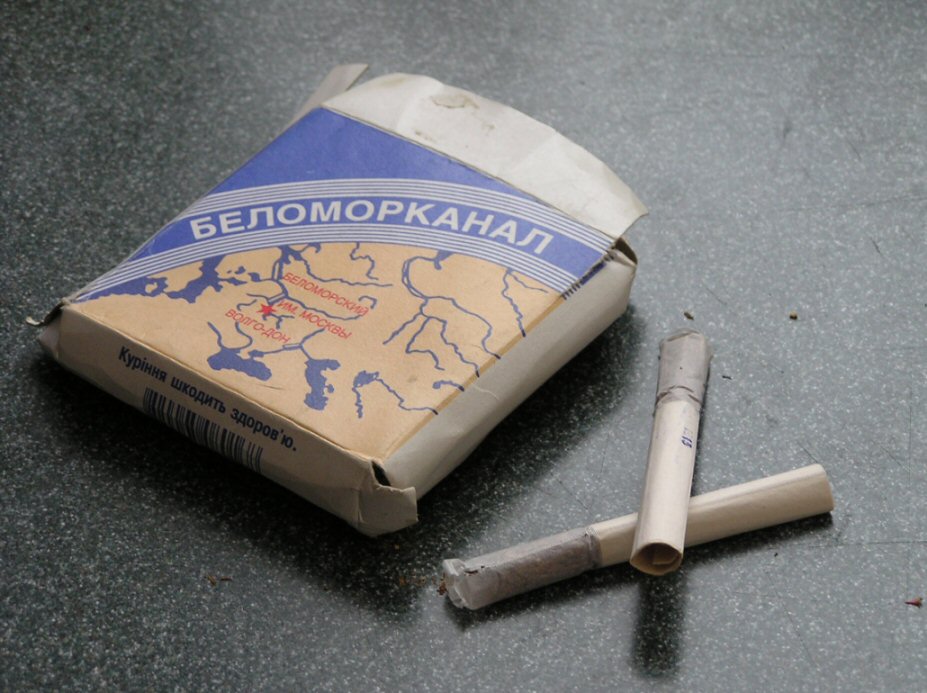
Here's a photo of a pack of cigarettes from the Soviet Union. They're supposed to still be quite common over there - strong, unfiltered and cheap. They're called Belomorkanal. The cover image shows a map of the country with the three canals that Stalin had gulag prisoners work on marked in red.
The projects included: the White Sea Canal, the Moscow Canal and the Volga-Don canal. These projects were built under brutal conditions. The White Sea Canal project was basically a waste of time because it was built in a hurry and therefore too narrow and too shallow. Many people died during its construction - including a brother of my mom's - who just disappeared while there. Nobody grieved his death, his lack of life, because everyone was too busy just trying to stay alive themselves. His name was Albert.
Uncle Albert was the son of a kulak and therefore, an enemy of the people. He lived, worked, and died for Stalin's vision of a canal that never worked. Cheap cigarettes?
Click here for more information and photographs about the building of the White Sea Canal.
Writing the books I never got to read.
Author of: Waltraut (2024), Crow Stone (2022) Tainted Amber (2021) Broken Stone (2015), Red Stone (2015) The Kulak's Daughter (2010)
TLA preparation
I've been working on my TLA (Texas Library Association) panel presentation. It's been fun re-visiting my work with a cultural diverse angle to it - rather than the usual historical one. It's also been a good exercise to assemble relevant literature into one concise collection. I've been collecting books on the Soviet times under Stalin for years now. I love my books.
When I look at the clutter of my life - I could probably get rid of most of it. I'd just keep the books and my rocks (okay, and those masterpieces my kids created).
I'm nervous and excited about TLA. I mean, I'm actually getting to go way down to Texas to talk about MY book. And I get to meet and mingle with real authors. It's going to be an adventure, that's for sure. My oldest daughter is traveling with me and we are going by bus (her idea) so that we see can actually see all the USA we pass - a 36 hour trip.
When I look at the clutter of my life - I could probably get rid of most of it. I'd just keep the books and my rocks (okay, and those masterpieces my kids created).
I'm nervous and excited about TLA. I mean, I'm actually getting to go way down to Texas to talk about MY book. And I get to meet and mingle with real authors. It's going to be an adventure, that's for sure. My oldest daughter is traveling with me and we are going by bus (her idea) so that we see can actually see all the USA we pass - a 36 hour trip.
Writing the books I never got to read.
Author of: Waltraut (2024), Crow Stone (2022) Tainted Amber (2021) Broken Stone (2015), Red Stone (2015) The Kulak's Daughter (2010)
Subscribe to:
Posts (Atom)
Recent Posts
Russians from Germany featured in New Fiction
English translation published by CMU Press I read two recently published works of fiction about Germans from Russia. Both authors had signin...
